1000W Power Station TV Runtime: Hours by TV Wattage
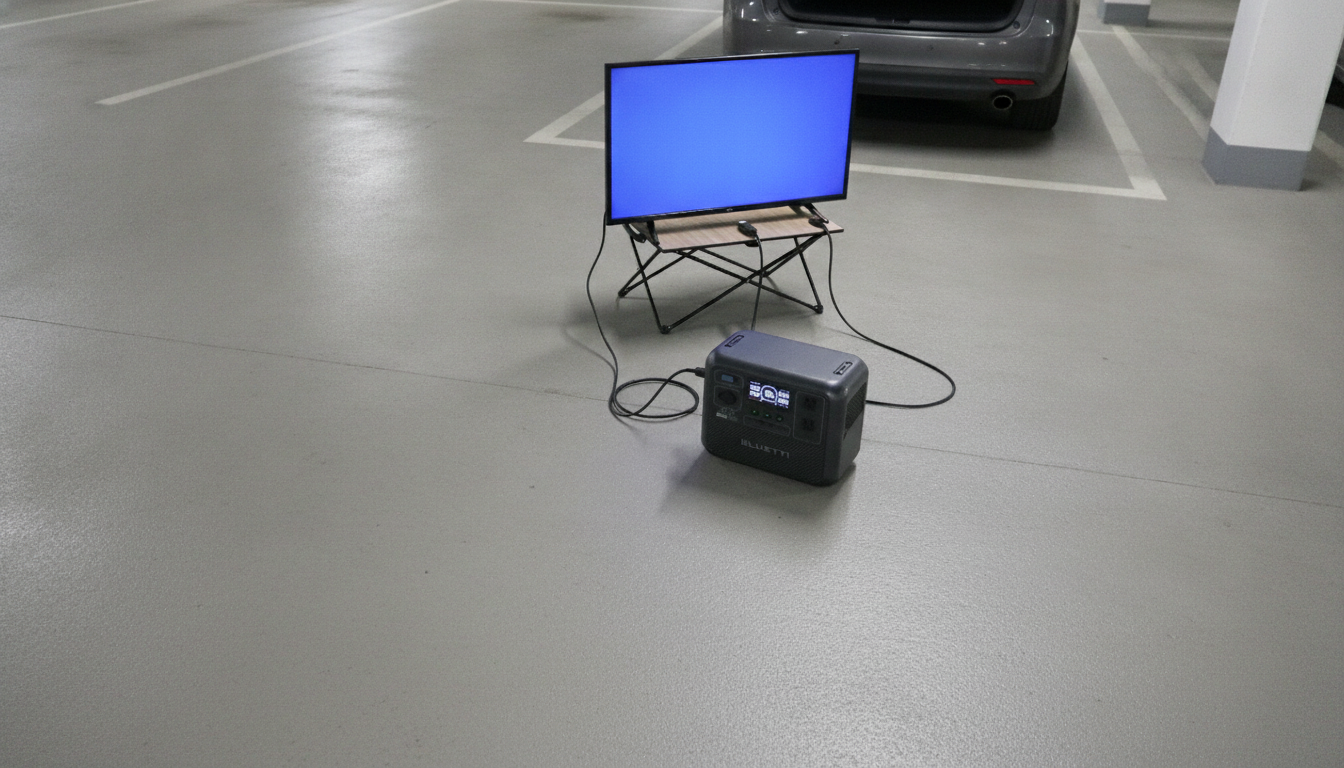
How long will a 1000 watt power station run a TV?
It depends on the TV’s wattage and the power station’s usable battery capacity. Most “1000W power stations” refer to the inverter’s maximum output, not how much energy is stored. Runtime is mainly driven by watt-hours (Wh). A common mid-size unit might have about 900–1100Wh, and after inverter losses you may have roughly 750–950Wh available for an AC-powered TV.
Quick runtime estimates
Use this simple rule: Runtime (hours) ≈ Usable Wh ÷ TV watts.
- 50W LED TV: 750–950Wh ÷ 50W ≈ 15–19 hours
- 100W TV: 750–950Wh ÷ 100W ≈ 7.5–9.5 hours
- 150W TV: 750–950Wh ÷ 150W ≈ 5–6.3 hours
- 200W large TV: 750–950Wh ÷ 200W ≈ 3.8–4.8 hours
What changes the result in real life
Brightness and volume can raise power draw noticeably, and streaming devices (Roku/Apple TV), soundbars, and game consoles add extra watts. Also, running the TV from AC outlets usually wastes more energy than using a DC output (if your TV supports it), because the inverter consumes power even at light loads.
A simple way to get a precise number
Check the TV’s label for watts (or measure with a plug-in watt meter), then look up the power station’s Wh rating. Multiply the Wh by about 0.85 for a reasonable AC efficiency estimate, then divide by the measured TV wattage.
For a deeper look at choosing and using a 1000W-class unit (battery size, output ports, solar recharging, and real-world expectations), see the full guide here: 1000W solar portable power station guide.
For 1000W Power Station TV Runtime: Hours by TV Wattage, the best answer depends on fit, material, care instructions, and how the product will be used day to day.
FAQ
Can a 1000 watt power station run a refrigerator?
Often yes for many modern fridges, but you must confirm the refrigerator’s starting surge and running watts. The bigger limitation is battery capacity (Wh), which determines how many hours it can run between recharges.













Leave a comment