1000W Solar Portable Power Station for Camping & Backup
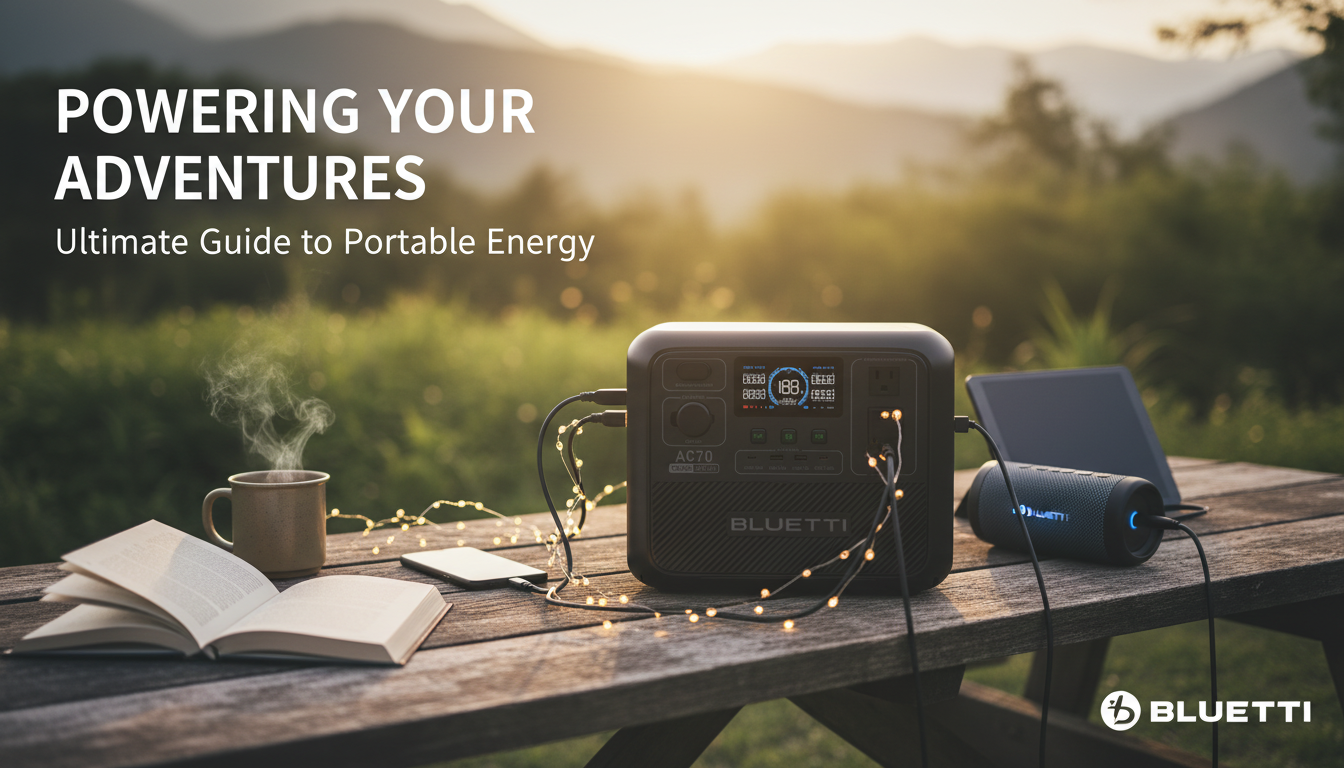
1000W Portable Power Station with Solar Charging: Reliable Off‑Grid Power for Camping and Emergencies
A portable power station that can recharge from solar panels delivers quiet, fuel-free electricity when outlets aren’t available. For camping, van life, and short emergency outages, a 1000W-class unit is a practical middle ground: powerful enough for everyday electronics and small appliances, yet still carryable and easy to recharge. Below is a clear look at what a 1000W portable power station can run, how solar charging performs outside of perfect conditions, what specs matter most, and how to set it up safely.
What a 1000W portable power station is designed to do
A 1000W portable power station is built to provide AC and DC power without a gas engine, exhaust, or the constant noise of a traditional generator. It’s a strong fit for weekend camping, remote work setups, charging camera/drone batteries, and keeping essentials running during a brief power outage.
While it can cover many day-to-day loads, the “1000W” class is intended for smaller appliances and electronics—not whole-home circuits, central HVAC, or multiple high-wattage kitchen appliances at once. Solar charging adds flexibility by letting you recover energy during daylight, reducing dependence on wall charging or your vehicle’s 12V outlet.
What it can run (and what it can’t)
This power range works well for phones, tablets, laptops, Wi‑Fi routers, LED lighting, fans, small TVs, CPAP machines (verify your model’s draw), camera chargers, and many small DC coolers. Some compact appliances—like a small blender or modest coffee maker—can work if their running wattage stays under the inverter rating and the unit can handle any startup surge.
It’s often not the right tool for high-wattage resistive loads such as space heaters, full-size kettles, hair dryers, and many large microwaves. Motor-driven devices (mini fridges, pumps, power tools) require extra attention: the running wattage may be fine, but the starting surge can exceed what a 1000W inverter can deliver.
Quick sizing examples (typical ranges)
| Device | Typical power draw | What to check before relying on it |
|---|---|---|
| Smartphone charger | 5–20W | Total daily charging needs and USB port availability |
| Laptop | 30–100W | Adapter wattage and expected runtime for work sessions |
| LED camp light string | 5–30W | DC options and dimming to extend runtime |
| CPAP (no heated humidifier) | 30–60W | DC compatibility; add headroom for all-night use |
| 12V cooler | 40–80W | Duty cycle varies by ambient temperature; prefer DC input |
| Microwave (compact) | 700–1200W | Often exceeds 1000W class; check nameplate and surge behavior |
Solar charging: what to expect in real life
Solar panel wattage is measured in ideal lab-like conditions. Outside, output commonly drops due to sun angle, heat, haze, and cloud cover. That doesn’t make solar charging “unreliable”—it just means planning matters. A bigger panel (or multiple panels), solid midday sun, and an efficient charge controller usually translate to faster refills.
In shoulder seasons and winter, shorter days and lower sun angles can reduce harvest; shaded campsites can reduce it even more. Treat solar as a dependable daily top-up that can meaningfully extend your runtime, rather than assuming it will always refill a depleted battery from empty to full in one afternoon. If you can, tilt the panel toward the sun and reposition it once or twice—small adjustments can produce noticeably better results. For background on sun angle and intensity, NOAA’s overview is a helpful reference: https://www.weather.gov/safety/uv-index.
Key specs that matter for daily use
Shopping by “watts” alone leads to frustration. A usable setup depends on several specs working together:
For general safety considerations when comparing portable power options, the U.S. Department of Energy’s generator guidance is a good baseline reference: https://www.energy.gov/energysaver/portable-generators.
How to match a power station to camping, travel, or home backup
Finally, build in headroom. Real trips include simultaneous charging, brief surges, and “oops” moments. Avoid operating at maximum output continuously, and plan solar panel capacity around average daily consumption, not peak moments. If you’re comparing solar panel claims and warranties, the Federal Trade Commission’s consumer guidance can help frame the questions to ask: https://consumer.ftc.gov/articles/solar-power-home.
Setup and safety essentials
Recommended option: 1000W Portable Power Station with Solar Charging
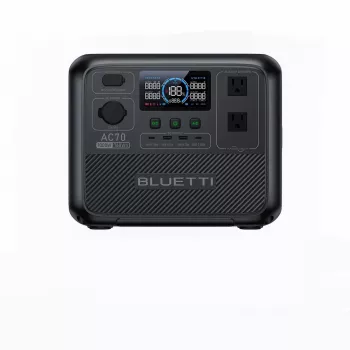
The 1000W Portable Power Station with Solar Charging is a strong match for anyone who wants one carryable unit to handle mixed AC and DC charging, with the ability to recharge from solar panels during the day. It works especially well for keeping the practical essentials going—lights, phones, and a router/modem—during short outages, and for building a quiet off-grid workstation at camp.
Other in-stock picks you may want to add to your cart
- Feel Alive Again Checklist – Digital Download Self-Care Guide (a simple routine builder for travel days and resets)
- New Balance Men’s Green Cotton T-shirt with Pocket (an easy camp and travel staple)
Care, storage, and long-term performance
FAQ
How long does a 1000W portable power station run typical devices?
Runtime depends on the battery capacity (watt-hours) divided by the device load (watts). A quick estimate is: runtime (hours) ≈ battery Wh × 0.85 ÷ device W, where the 0.85 factor accounts for typical conversion losses on AC power.
Can it run a mini fridge or cooler overnight?
Many 12V coolers can run overnight, but the result depends heavily on duty cycle, ambient temperature, and insulation. For compressor mini fridges, confirm both running watts and starting surge, and use a DC input when possible to improve efficiency.
Do solar panels charge it on cloudy days?
Yes, solar panels still produce power in cloudy conditions, but charging is slower due to reduced sunlight intensity. Using higher-wattage panels and positioning them for the brightest available sky can improve day-to-day replenishment.















Leave a comment