Build a Wooden Cruiser Motorcycle 3D Gear Puzzle Kit

DIY Wooden Cruiser Motorcycle Model Kit – 3D Puzzle with Mechanical Gears
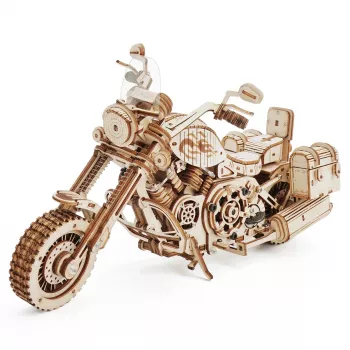
A wooden cruiser motorcycle you build yourself combines the satisfaction of a hands-on project with the charm of moving mechanical parts. This model kit is designed for careful, screen-free making: assembling precision-cut wooden pieces into a display-worthy bike, then watching the gears and linkages bring it to life as a kinetic desktop centerpiece. Whether it ends up on a bookshelf, office desk, or workbench, the finished model delivers that rare mix of craft aesthetics and “it actually moves” delight.
What makes this cruiser model different
This kit leans into classic cruiser styling—low-slung stance, distinctive frame lines, and a woodcraft finish that feels warm and intentional rather than plastic and mass-produced. Once assembled, it reads as décor, but it also rewards closer inspection with mechanical details that invite a quick spin or gentle operation to see the drivetrain-like motion.
- Motorcycle cruiser styling with a woodcraft finish that looks great on a shelf, desk, or workshop bench
- Mechanical gear details that add motion and a “working machine” feel once assembled
- A build experience that blends puzzle-solving with light engineering concepts (alignment, friction, gear meshing)
- A thoughtful gift option for hobbyists, teens, and adults who enjoy models, puzzles, and mechanical objects
If you want the exact product page with current availability, see DIY Wooden Cruiser Motorcycle Model Kit – 3D Puzzle with Mechanical Gears.
What’s included and what to have on hand
Most builders find wooden mechanical kits easiest when they’re treated like a “precision craft” project rather than a rush job. The core experience is assembling pre-cut wooden pieces into a rigid 3D motorcycle structure while keeping moving parts square and free-running.
- Pre-cut wooden sheets/pieces intended to be assembled into a 3D motorcycle form
- Mechanical elements (gears and moving components) integrated into the structure
- A step-by-step build flow that rewards dry-fitting and careful sequencing
- Helpful optional tools: fine sandpaper, tweezers, small clamps or rubber bands, wax or graphite for smoother motion, and wood glue if the kit supports it
Quick checklist for a smoother build
| Item | Why it helps |
|---|---|
| Fine sandpaper (400–800 grit) | Softens tight joints and cleans small tabs for better fit |
| Tweezers or needle-nose pliers | Positions tiny parts without stressing wood fibers |
| Candle wax or graphite | Reduces friction in gear contact points and axles |
| Rubber bands or small clamps | Holds parts steady while joints settle |
| Wood glue (optional) | Adds durability if the instructions allow glue usage |
For general safe handling practices while crafting and working with tools, OSHA’s guidance on woodworking safety is a helpful reference: OSHA Woodworking Safety.
Build time, difficulty, and who it suits
This is best approached as a “slow build.” Expect the most time to go into aligning assemblies that will later carry gears or axles, because even small twists can show up as stiffness after everything is closed up. It’s a satisfying project for detail-oriented builders who enjoy the cadence of dry-fit, confirm, then press together.
- Best for patient builders who enjoy following multi-step assemblies and checking alignment as they go
- A good choice for family projects where an adult can help with delicate gear areas and tight tolerances
- Ideal for makers who like mechanical motion and want a display piece that also “does something”
- If gifting: pair with simple accessories like a small sanding pad set or a model stand for presentation
If you’re building out a cozy hobby corner, a stable “pet-free” surface helps keep tiny parts from wandering. For cat households, a dedicated, appealing spot can help redirect curiosity—consider Solid Wood Cat Tree with Hammock & Nest to keep your work area calmer during longer sessions.
How the mechanical gears bring it to life
Wood movement is also real: humidity can change fit and friction slightly. For a deeper look at how wood behaves as a material (including moisture considerations), the USDA Forest Service’s resource is excellent: Wood Handbook: Wood as an Engineering Material.
Tips for cleaner assembly and a better finish
For builders who like structure and a calm, step-by-step rhythm, pairing a maker session with a simple reset routine can be surprisingly effective—especially for longer builds. If that sounds useful, Feel Alive Again Checklist – Digital Download Self-Care Guide is an easy add-on for breaks between build stages.
Care, storage, and long-term durability
Where to get it and what to expect at delivery
DIY Wooden Cruiser Motorcycle Model Kit – 3D Puzzle with Mechanical Gears is available while supplies last. Check the listing for current price, stock, and shipping details before ordering, and plan a dedicated build session once it arrives. Small containers (like condiment cups or a parts tray) help prevent “missing piece” moments, especially during gear-related steps where multiple similar parts may appear in a single stage.
FAQ
Is this kit better with glue, or can it be assembled without it?
Many wooden model kits are designed for press-fit assembly, so it’s best to follow the included instructions. Glue can increase durability if allowed, but it may reduce your ability to fine-tune alignment while you’re dialing in smooth gear motion.
How can the gears be made to turn more smoothly after assembly?
Check for slight misalignment, lightly sand any tight contact points, and remove dust from gear teeth. A tiny amount of wax or graphite on axles and gear faces often improves motion; avoid liquid oils that can soak into wood and attract dust.
Is it suitable for kids?
It’s generally best for teens and adults, or for younger builders with close adult supervision. Small parts, tight tolerances, and the patience required for gear alignment can be challenging for younger kids.















Leave a comment