Solid Wood Cat Tree: Hammock & Nest Comfort Guide
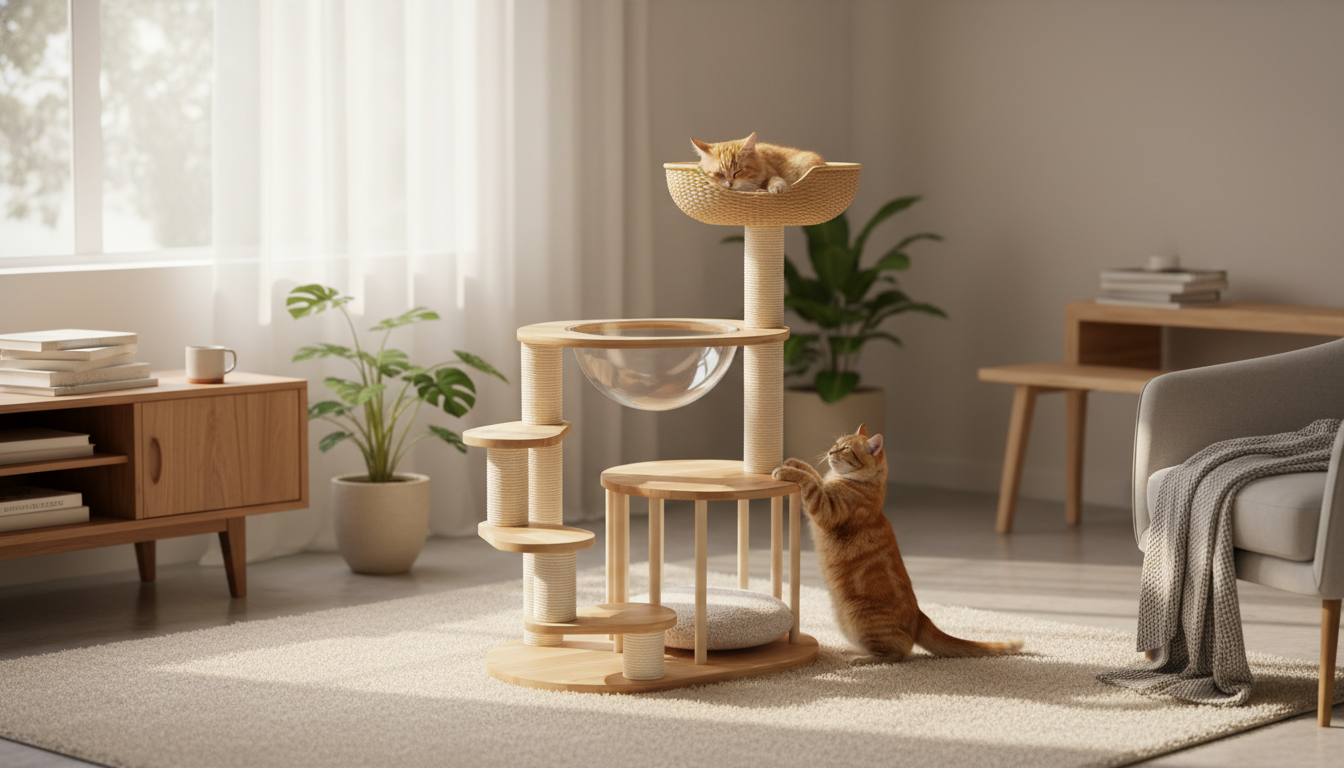
Solid Wood Cat Tree with Hammock & Nest: A Cozy, Durable Hangout for Cats
A solid wood cat tree that includes both a hammock and an enclosed nest can cover the three things most indoor cats want every day: a high perch to observe, a tucked-away spot to hide and nap, and a soft place to lounge. The right setup can also reduce “problem” scratching by giving cats a satisfying, stable alternative close to where they already like to sharpen their claws. Below is what to look for, where to place it, and how to keep it inviting from kittenhood through the senior years.
Why solid wood makes a difference
Not all cat trees feel the same under a running jump or a mid-air twist. Solid wood construction changes the experience in ways many cats (and cat parents) notice quickly.
- Less wobble during big leaps: Added weight and rigidity can reduce sway when energetic cats launch themselves onto the top level—especially helpful in multi-cat homes where “traffic” is constant.
- Better long-term stiffness: Natural wood posts and platforms tend to resist flexing and fastener loosening better than thin composite panels, so the structure stays more confidence-inspiring over time.
- Security for cautious cats: A sturdy frame helps the hammock and nest feel stable, which can be the difference between “ignored” and “used daily” for timid or newly adopted cats.
- Cleaner edges, easier upkeep: Wood surfaces are often easier to spot-clean than carpeted particleboard edges that can fray and trap fur.
Hammock + nest: two comfort zones with different benefits
A hammock and an enclosed nest aren’t redundant—they serve different moods and needs. Cats often “rotate” between them depending on temperature, noise, and how social they feel.
- Hammock lounging: The curved cradle supports the body in a relaxed arc; many cats pick hammocks for longer naps and for cooling off or warming up depending on airflow and fabric.
- Enclosed nest: A covered space reduces visual stimulation and provides privacy, which can help anxious cats settle more quickly and stay asleep longer.
- Built-in variety: Moving through stations (perch → hammock → nest) encourages natural climbing and stretching, helping reduce boredom without needing a huge footprint.
- Less competition: In multi-cat households, having both an open and enclosed rest option can reduce crowding and tension—one cat can “be seen” while another can opt out.
Quick fit check for your cat and your space
| What to measure | What to look for | Why it matters |
|---|---|---|
| Floor area | Base fits your chosen corner without blocking doors/drawers | Prevents frequent bumps and keeps the tree usable daily |
| Ceiling/vertical clearance | Top perch sits below shelves/ceiling fans; no collision zone | Safer jumping and better placement options |
| Cat length (nose to base of tail) | Nest opening and interior allow a comfortable curl and turn | Cats avoid spaces that feel too tight |
| Cat weight and mobility | Stable steps/platform spacing that matches your cat’s jumping ability | Supports seniors, larger cats, and cautious climbers |
| Hammock size and tension | Fabric cradles without sagging to the floor; attachment points feel solid | Comfort and confidence when settling in |
Choosing the right height and layout
The best layout is the one your cat will actually use. Think about what your cat likes to watch, how they move, and whether they share space with other cats.
- Window-watching: Place the highest perch near a window to create “cat TV.” A slightly off-center angle can help cats see outdoors while still feeling protected.
- Small-room strategy: In tight spaces, prioritize vertical height over a wide footprint, but keep walkways clear so the tree doesn’t become an obstacle (or a reason to stop using it).
- Senior-friendly steps: Older cats do better with shorter hops between levels. A nearby ottoman or small step can turn an “almost” climb into a daily habit.
- Multi-cat flow: Favor designs with more than one route up and down. Multiple pathways reduce cornering and give each cat a way to exit without conflict.
Stability, scratching, and daily use
A cat tree earns its keep when it becomes part of the household routine: scratch, climb, nap, repeat. A few practical setup habits help it stay sturdy and appealing.
For more on creating a cat-friendly home environment and enrichment, see the American Association of Feline Practitioners (AAFP) – Feline Environmental Needs Guidelines and the ASPCA cat care resources. If scratching is a challenge, the Humane Society guidance on cat behavior and scratching is a helpful reference.
Placement ideas that cats actually use
Care and upkeep for wood, fabric, and sisal
A ready-to-go option: Solid Wood Cat Tree with Hammock & Nest
More in-stock picks from our store
- Shockproof Laptop Sleeve Case for MacBook Air/Pro 13-16 Inch – Stylish & Durable (USD 30.97)
- New Balance Men’s Green Cotton T-shirt with Pocket (USD 24.52)
FAQ
Will a hammock be comfortable for larger cats?
It can be, as long as the hammock is sized appropriately, has firm fabric tension that doesn’t bottom out, and uses secure attachment points. For bigger cats, a stable frame and a deep cradle make getting in and out feel safer.
How can the cat tree be made more stable on slippery floors?
Place a non-slip mat under the base, make sure all fasteners are fully tightened, and confirm the base sits flat with no rocking. Positioning it against a wall can add confidence, but avoid wedging it on uneven rugs that introduce wobble.
How do you get a cat to use the nest instead of hiding under furniture?
Set the tree near your cat’s preferred hiding area, add a familiar blanket, and reward curiosity with a few treats or a small amount of catnip. Keep the entrance facing a quieter direction and never force your cat inside—consistent, low-pressure exposure works best.















Leave a comment