Save $5,000 in 6 Months: Weekly Plan & Checklist
Save $5,000 in 6 Months: A Step-by-Step Plan That Fits Real Life
A $5,000 savings goal can feel huge until it’s broken into simple monthly and weekly moves. The key is turning “save more” into a repeatable routine that works on busy weeks, low-energy weeks, and the occasional expensive surprise. Below is a practical six-month roadmap, options for different income styles, and a checklist that keeps progress visible without requiring a perfect budget.
Start With the Goal, Not the Guilt
Start by naming the target clearly: $5,000 saved by the end of month 6. Clarity beats motivation—especially when life gets noisy.
- Define the purpose. Emergency cushion, moving costs, a debt buffer, tuition, or a travel fund—attach a “why” so it’s harder to raid the money for impulse spending.
- Choose two targets: a “minimum viable” monthly amount and a “stretch” amount. That way a rough month doesn’t turn into quitting.
- Decide where the money will live. A separate savings account or a high-yield savings account can reduce accidental spending because it’s not mixed with bill money.
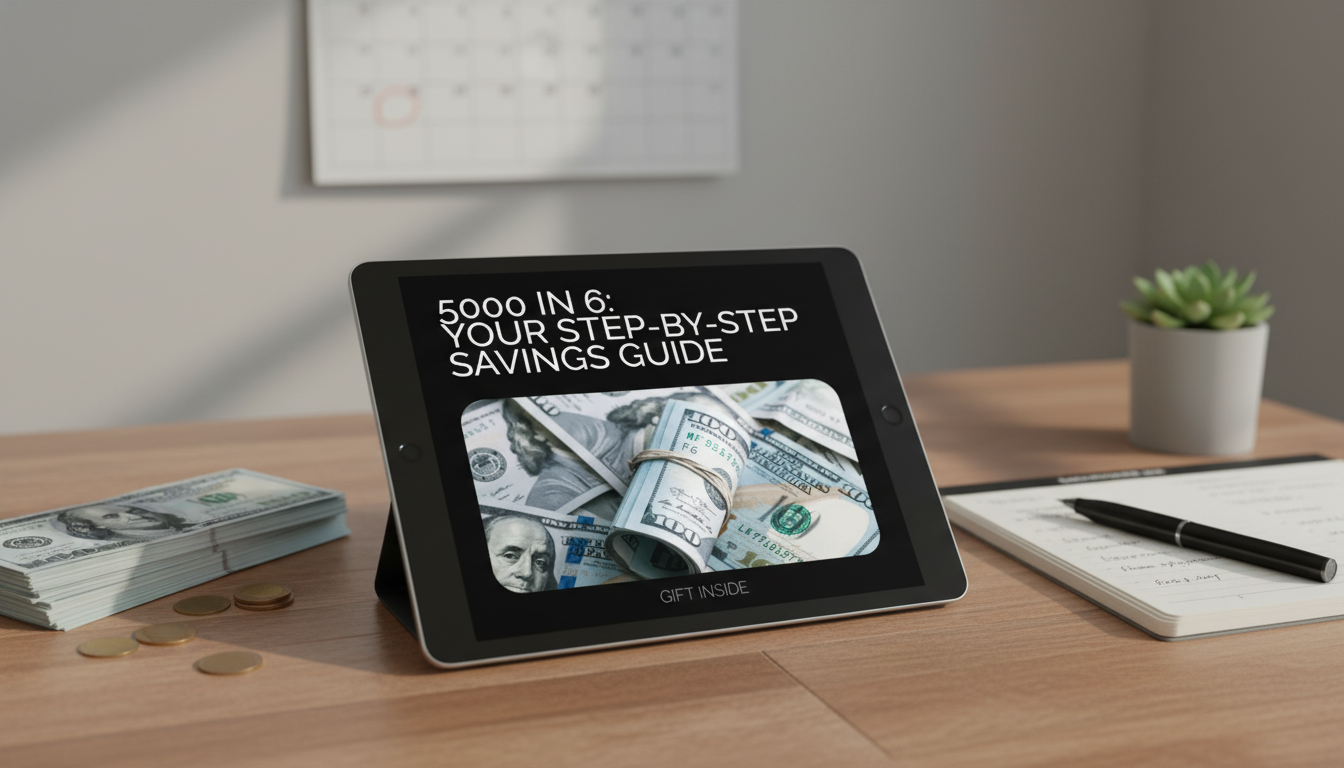
If you want guidance without building your own system from scratch, a ready-made option like 5000 in 6: Your Step-by-Step Savings Guide (digital download) can help keep decisions simple when you’re busy.
The $5,000 Breakdown: Monthly, Weekly, and Daily Targets
Big goals become doable when they’re translated into checkpoints. Use the weekly number as your main lever because it’s easier to adjust than trying to make one big monthly transfer.
| Timeframe | Target Amount | What It Looks Like |
|---|---|---|
| Per month (6 months) | $833.34 | Automate on payday or split into two transfers |
| Per week (26 weeks) | $192.31 | One larger cut or several small wins (subscriptions + groceries + eating out) |
| Per day (182 days) | $27.47 | Helpful as a mindset tool, not a strict rule |
Plan for uneven months (car repairs, birthdays, school costs) by building a small buffer early. Even an extra $100–$250 saved in month 1 can prevent a later “catch-up” spiral.
Month 1: Set the Foundation (Fast Wins Without Feeling Deprived)
Month 1 is about momentum, not perfection. You’re looking for the easiest dollars to redirect—money that’s currently leaking out with minimal joy attached.
- Track spending for 7–14 days. Focus on quick categories: food delivery, convenience buys, and unused subscriptions.
- Cancel or pause 2–5 nonessentials. Then transfer that exact amount into savings immediately so it doesn’t get absorbed elsewhere.
- Create three buckets: needs, wants, and goals. Keep it simple enough that you’ll actually use it.
- Schedule one weekly “money hour.” Same day/time: check balances, upcoming bills, and your current weekly target.
- Make an early deposit. Even $50–$200 builds psychological traction—proof that the plan is real.
If stress tends to trigger spending, pairing your money hour with a quick reset routine can help you stay consistent. Feel Alive Again Checklist (quick reset routines for stressful weeks) is a simple, low-friction way to keep your head clear on weeks when discipline feels thin.
Months 2–3: Lock in Automation and Shrink the Big Categories
Once you’ve identified easy wins, shift to the moves that create reliable savings without daily willpower.
- Automate transfers right after pay hits. Treat savings like a bill. If possible, split it: half on payday, half mid-pay period.
- Lower fixed costs. Negotiate internet/cable, review insurance rates, adjust your phone plan, and eliminate bank fees.
- Cut grocery waste. Choose 6–10 repeat meals, shop with a list, and set a weekly food cap. Repeats reduce decision fatigue and last-minute takeout.
- Add “planned fun.” A small wants line item prevents rebound spending—because deprivation often snaps back.
- If income varies: automate a baseline amount and add a percentage-based top-up on high-income weeks (example: 10–20% of that week’s extra pay).
For additional budgeting and cash-flow tools, the Consumer Financial Protection Bureau (CFPB) and FDIC Money Smart resources are practical and beginner-friendly.
Months 4–5: Add Income Boosters That Don’t Burn You Out
Also consider doing a quick reality check on typical household spending patterns using U.S. Bureau of Labor Statistics (BLS) Consumer Expenditure data. It can help you spot which categories tend to run high for many households (and where your own numbers might be drifting).
Month 6: Protect the Finish Line (And Keep the Habit After)
A Simple Checklist to Stay Consistent
A Guided Option for People Who Prefer a Ready-Made Plan
For a clear roadmap you can follow week by week, see 5000 in 6: Your Step-by-Step Savings Guide (digital download).
FAQ
Is saving $5,000 in 6 months realistic on an average income?
It can be realistic, but it depends on your fixed expenses, debt payments, and how stable your income is. Many people close the gap by automating weekly transfers, trimming a few high-impact categories, and adding one short-term income booster. Setting a minimum target plus a stretch target helps you stay in the game through uneven months.
What if income is irregular or seasonal?
Use a baseline automatic transfer you can afford even in low weeks, then add a percentage “top-up” on higher-income weeks. Build a small buffer in month 1 so surprises don’t derail you. Keep your focus on weekly targets and adjust month to month rather than starting over.
Where should the savings be kept so it’s accessible but not tempting?
A separate savings account or high-yield savings account usually works well because it separates the money from everyday spending. For a short six-month goal, keeping it liquid is typically safer than investing it. If temptation is a problem, choose an account that makes transfers slightly less immediate.
















Leave a comment