1500Pa Robot Vacuum for Pet Hair + Auto Charging Base
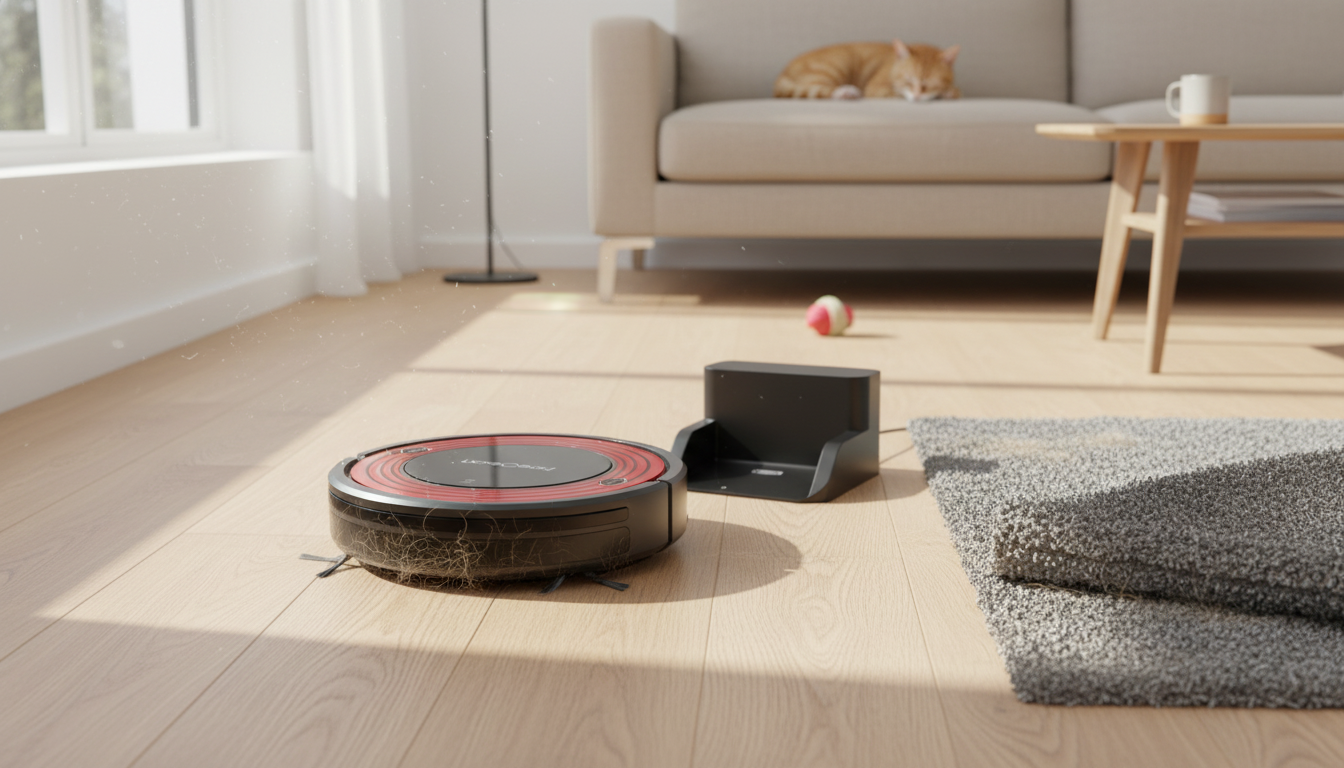
1500Pa Robot Vacuum Cleaner with Charging Base for Pet Hair Cleanup
Pet hair builds up fast on hard floors, rugs, and along baseboards. A compact robot vacuum with a charging base can handle frequent pickup runs, keeping shedding under control between deeper cleanings. For busy pet homes, the big win is consistency: quick, regular passes that prevent fur “drifts” from forming under furniture and in high-traffic lanes.
What this robot vacuum is designed to handle
A 1500Pa robot vacuum is a practical choice for everyday mess in pet-friendly spaces—especially where hair and tracked-in debris show up daily. It’s built for routine cleanup rather than occasional marathon sessions.
- Daily pet hair pickup on hard floors and low-pile rugs
- Dust, crumbs, and tracked-in debris in high-traffic areas
- Quick maintenance cleans for homes with cats or dogs
- Hands-off recharging with an included charging base
Key features that matter for pet hair
Pet hair behaves differently than ordinary dust—it clings to edges, collects under beds, and tangles around moving parts. These features help keep pickup reliable day after day.
- 1500Pa suction strength (as listed): Enough pull to gather surface hair, kibble crumbs, and light debris from everyday flooring.
- Charging base support: Dock-and-recharge convenience keeps the vacuum ready for frequent runs without manual babysitting.
- Low-profile, under-furniture reach: Helpful for hair tumbleweeds hiding under sofas, beds, and cabinets where upright vacuums don’t go often.
- Better results with basic prep: Clearing cords, small toys, and long strings prevents snags and reduces interruptions.
For households focused on indoor air and allergens, routine vacuuming can be part of a broader approach that includes ventilation and regular cleaning of pet zones. For general guidance on indoor air quality and cleaning, see the EPA’s indoor air quality resources, and for pet dander exposure tips, the American Lung Association.
Quick specs and buying checklist
For pet owners, the goal is a vacuum that can keep up with shedding patterns and daily foot traffic. Use this quick checklist to set expectations and keep maintenance manageable.
- Use suction power, docking, and routine scheduling as the baseline for pet homes
- Plan for simple upkeep: emptying, checking intake paths, and cleaning brushes/filters
- Match expectations: robot vacuums excel at maintenance cleaning, not replacing deep-clean vacuuming on thick carpet
At-a-glance details
| Item | What to look for | This model |
|---|---|---|
| Suction | Enough pull for surface hair and everyday debris | 1500Pa |
| Charging | Home base for consistent readiness | Charging base included |
| Primary use | Maintenance cleaning for pet hair and dust | Pet hair removal focus |
| Best floor types | Hard floors and low-pile rugs | Most suitable for everyday mixed surfaces |
If you like seeing independent testing approaches and evaluation criteria for robot vacuums, Consumer Reports’ robot vacuum guidance is a useful reference for what typically impacts real-world performance.
How to get better pet-hair pickup day to day
Small routine tweaks can noticeably improve how much hair a robot vacuum collects—and how often it finishes a run without getting stuck.
- Run it more often: Frequent short cleans typically outperform occasional long cleans during shedding seasons.
- Start with “hot spots”: Entryways, litter areas, feeding stations, and favorite pet nap zones are where hair and grit concentrate.
- Reduce tangles: Pick up strings, ribbon toys, and long cables before a run to help prevent jams.
- Light rug prep helps: Shake or spot-vac the thickest rugs occasionally so the robot can focus on maintenance pickup.
- Keep airflow strong: Empty the bin and check for blocked intake paths routinely—especially after high-shed days.
A helpful rhythm for many pet homes is a quick daily run in the main living areas, plus an extra pass near litter boxes or feeding stations as needed. This keeps fur from migrating room to room and building into visible clumps along edges.
Maintenance routine for consistent performance
Pet hair can wrap around intake points and reduce suction over time. A simple maintenance loop keeps performance steady and extends the life of parts that contact hair the most.
- After heavy-shed days: Empty the dustbin and remove wrapped hair from the intake/brush area.
- Weekly: Wipe sensors and check wheels for hair buildup that can affect movement.
- Monthly: Inspect the charging contacts and keep the dock area clear for reliable docking.
- If allergies are a concern: Wash hands after bin emptying and clean the area around the dock to reduce lingering dust and dander.
Who this is best for (and who should look elsewhere)
Robot vacuums shine when the goal is “always a little cleaner” rather than “perfectly deep-cleaned every time.” This model is a strong match for routine pet-hair control on common household surfaces.
Product options in stock
- 1500Pa Suction Robot Vacuum Cleaner with Charging Base & Pet Hair Removal — suited for keeping fur and everyday dust under control on hard floors and low-pile rugs.
- Solid Wood Cat Tree with Hammock & Nest — a dedicated lounging and perching area that can reduce random shedding hotspots across furniture.
FAQ
Is 1500Pa suction enough for pet hair?
For hard floors and low-pile rugs, 1500Pa is commonly sufficient to pick up surface pet hair and everyday debris. On thick carpet where hair gets embedded, occasional deep vacuuming is still typically needed.
How often should a robot vacuum run in a home with pets?
Daily runs (or several times per week) work best for preventing hair buildup, especially during shedding seasons. Adjust frequency based on how many pets you have and how much carpeted area you need to maintain.
What maintenance helps prevent pet hair from clogging a robot vacuum?
Empty the bin regularly, remove wrapped hair from the brush/intake area, and wipe sensors so navigation stays consistent. Keeping charging contacts and the dock area clean also helps the vacuum recharge and run on schedule.















Leave a comment