470°F Ceramic 2-in-1 Straightener Curler (Dual Voltage)
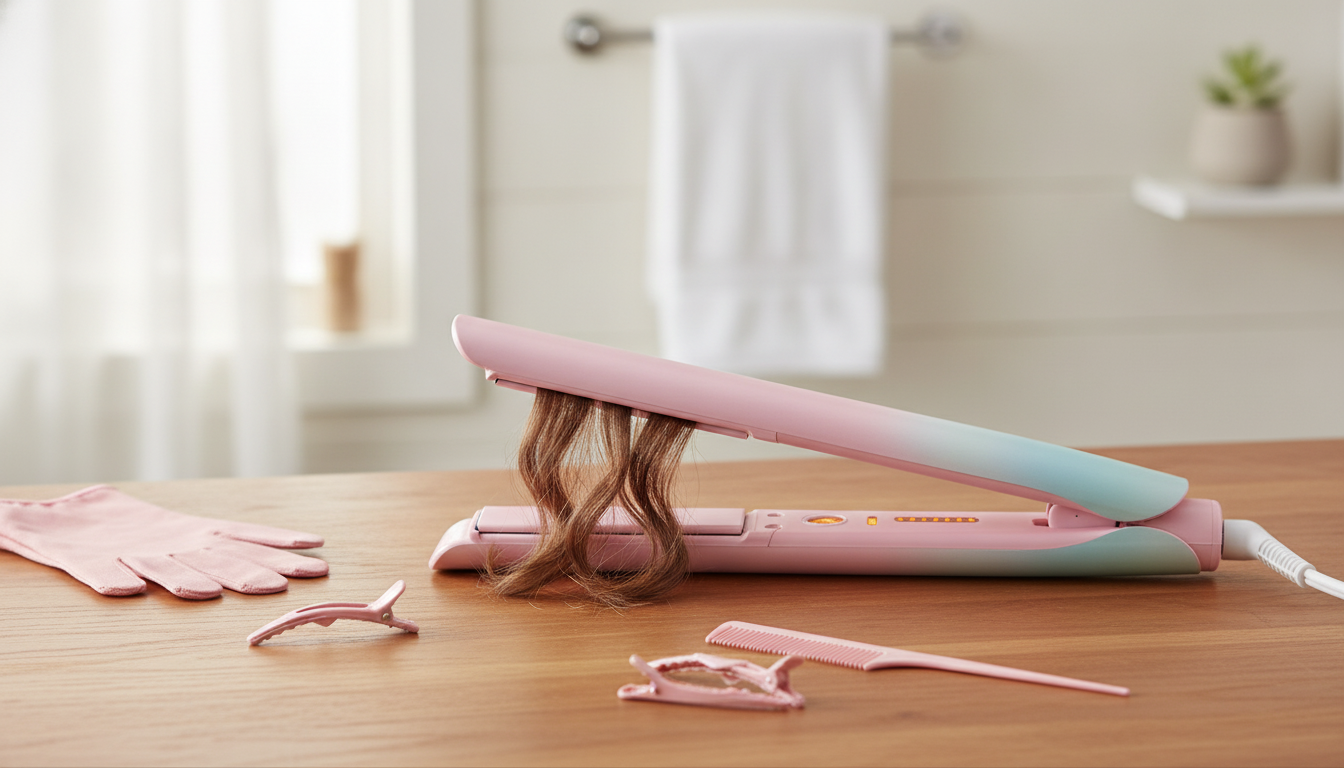
Smooth, Sleek, and Soft Curls Anywhere with a High-Heat Ceramic 2-in-1 Tool
A single styling tool can simplify mornings and travel days—especially when it heats evenly, glides without snagging, and works on different voltages. A ceramic straightener-and-curler hybrid is built for high-heat styling up to 470°F with dual voltage compatibility, aiming for polished straight looks, bends, and curls with one device. If the goal is a smoother finish in fewer passes (and fewer tools in a suitcase), a ceramic 2-in-1 is a practical upgrade for everyday routines. For more guidance, see 8 Best Curling Irons, Tested by Our Experts – Consumer Reports.
What This Straightener–Curler Is Designed to Do
This style of tool is made for flexibility: it can press hair straight, shape ends, and create everything from loose waves to more defined curls using the same set of plates. For further reading, see Dual Voltage Flat Iron.
- Create multiple looks: pin-straight finishes, soft waves, flipped ends, and defined curls using the same plates.
- Use ceramic heat to support smoother glide and more even heat distribution for consistent results section to section.
- Reach higher temperatures (up to 470°F) for styles that need more heat—especially on coarse, thick, or very curly textures (with heat protectant).
- Pack-friendly dual voltage helps keep styling consistent while traveling internationally with the right plug adapter.
For shoppers who want one device that can handle both quick touch-ups and full styling sessions, the Professional Ceramic Hair Straightener & Curler 470°F Dual Voltage is designed around that all-in-one approach.
Key Features That Matter in Daily Styling
Not every straightener feels the same in real use. The most helpful features show up in small details—how the plates glide, how predictable the heat feels, and how easily it switches from straightening to curling.
- Ceramic heating surfaces: typically chosen for even heat and a smoother pass that can reduce repeated strokes on the same section.
- High-heat capability up to 470°F: useful for faster set on resistant hair types; lower settings are usually preferable for fine, fragile, or color-treated hair.
- Dual voltage support: intended for use on common 110–120V and 220–240V power systems (a plug adapter may still be required).
- Two-in-one form factor: rounded edges and plate design help switch between straightening and curling without changing tools.
- Everyday usability: look for comfortable grip, predictable temperature control, and a design that makes it easy to get close to the roots without pulling.
For overall hair health habits—especially when heat styling frequently—helpful baseline guidance is available from the American Academy of Dermatology Association.
Temperature Guide: Matching Heat to Hair Type and Goal
The best temperature is the lowest one that gets the job done with minimal passes. Higher heat can improve efficiency on thick or coarse hair, but technique (section size, tension, and speed) often matters as much as the number on the dial.
Quick Heat & Styling Reference
| Hair type / condition | Suggested approach | Styling tip for better results |
|---|---|---|
| Fine / fragile | Start low; increase gradually | Use smaller sections; one slow pass instead of multiple fast passes |
| Color-treated / processed | Use lowest effective heat | Apply heat protectant and keep plates moving to avoid hot spots |
| Medium / normal | Moderate heat | Maintain steady tension; finish with a cool shot (if available) or clip curls to set |
| Thick / coarse / curly | Higher heat if necessary | Pre-dry fully; work in narrow sections to reduce repeat passes |
| Waves / bends | Moderate-to-lower heat | Rotate slightly at mid-lengths; avoid squeezing too hard at the ends |
If hair is dyed, relaxed, or otherwise chemically treated, it’s also worth reviewing consumer safety considerations around hair products from the U.S. Food & Drug Administration, then pairing heat styling with a reliable protectant and gentler settings.
How to Straighten for a Glossy Finish (Without Overworking Hair)
A sleek result usually comes from preparation and control—not repeatedly clamping the same area. Aim for clean sections, steady movement, and minimal rework.
- Prep: hair must be completely dry; apply heat protectant evenly, then detangle to prevent snagging.
- Sectioning: divide into manageable layers; thinner sections allow a smoother result at lower heat.
- Technique: place hair near the roots, close plates gently, and glide down in one controlled pass; avoid stopping mid-strand.
- Polish: for flyaways, use a slightly lower setting and a light finishing serum on ends—keep product off the roots to maintain volume.
- Common issues: if hair feels “stuck,” reduce tension, check that sections aren’t too thick, and ensure hair is fully dry.
How to Curl and Wave With a Straightener-Style Tool
The secret to curls with a straightener is the wrist rotation plus consistent tension. Once the curl is formed, cooling time helps it hold its shape.
Travel and Dual Voltage: Practical Use Notes
For travelers who like pairing a streamlined beauty routine with a simple personal reset, a printable planning companion such as the Soulful Success Checklist: Your Step-by-Step Guide to Spiritual Goals can be an easy add-on for downtime between flights, meetings, or events.
Care, Safety, and Longevity Tips
FAQ
Is 470°F safe for hair?
470°F can be appropriate for thick or very coarse hair when used carefully, but it raises the risk of dryness and breakage. Use the lowest effective temperature, apply heat protectant, work in small sections, and avoid repeated passes over the same strand.
Does dual voltage mean it will work in any country?
Dual voltage supports common voltage ranges, but many countries still require a plug adapter that matches the outlet shape. Confirm local voltage and use a quality adapter; avoid using cheap converters unless the device specifically calls for one.
Can a straightener really make curls that last?
Yes—lasting curls depend on technique, section size, temperature, and cooling time. Rotate the tool with steady tension, let curls cool fully before brushing, and finish with a light-hold spray after the set.








Leave a comment