Toy Storage for Lots of Kids’ Toys: Simple Systems
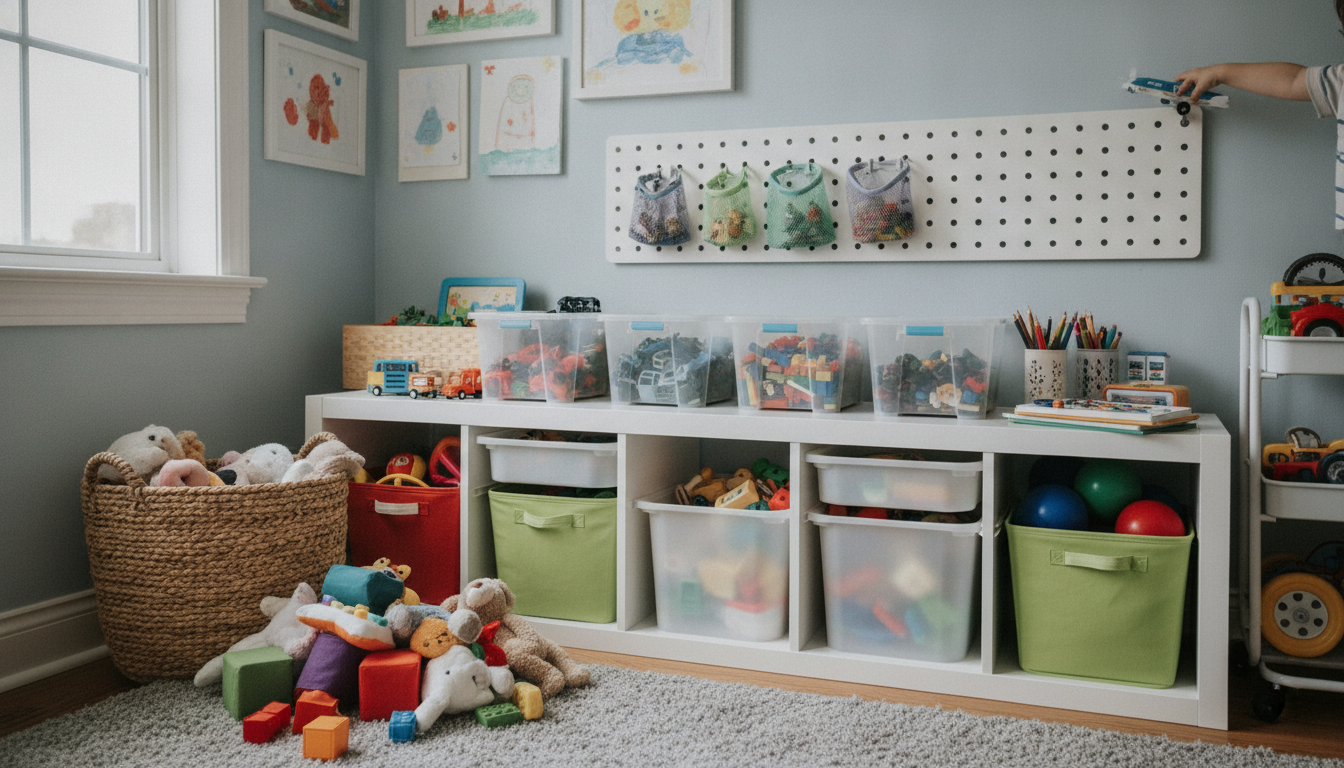
How do you store a lot of toys for kids?
Storing a lot of kids’ toys gets easier when every category has a “home” and the storage matches how your child actually plays. Start by sorting toys into a few broad groups (building sets, dolls/figures, vehicles, art supplies, puzzles/games, and “tiny pieces”). Then decide what needs quick access versus what can rotate in and out.
For everyday play, use a mix of open and closed storage. Open cubbies and low shelves keep favorites visible and easy to put away, while drawers and lidded bins hide visual clutter and are ideal for small parts. Label each spot with simple words or picture labels so kids can help with cleanup without constant direction.
Choose storage that fits the room and the routine
In shared spaces like a living room, stick with a few uniform bins in a shelf or console so everything looks intentional. In a playroom, go bigger: a cube organizer with fabric bins for categories plus a few drawers for “messy” items like slime kits or craft supplies. If space is tight, vertical solutions help—tall shelving anchored to the wall, door-hanging organizers for dolls and accessories, and under-bed bins for bulky sets.
Make cleanup fast (so it actually happens)
Use the “one bin per category” rule for most toys, and a dedicated small container for instruction booklets, cards, or missing pieces. Keep a donate box accessible and do a quick reset weekly: toss broken items, relocate outgrown toys, and rotate a couple of bins into storage to reduce overload. The goal isn’t perfect organization—it’s a system that takes five minutes to maintain.
For more ideas on combining shelves, reading nooks, toy storage drawers, and cubbies, see this complete kids’ storage guide.
FAQ
How do you organize toys in a small space?
Prioritize vertical storage (tall shelves, wall hooks, over-the-door organizers) and use under-bed bins for bulky toys. Keep only a few categories out at once and rotate the rest to prevent clutter from taking over.











Leave a comment