How to Help Your Child Focus on Homework (No Drama)
How to help your child focus on homework?
Helping a child focus on homework is usually less about “trying harder” and more about setting up the right conditions: predictable timing, a calm workspace, and short, repeatable routines. When the environment does the heavy lifting, kids spend less energy resisting and more energy getting started.
Start with a consistent pre-homework routine
A quick transition ritual can prevent the after-school crash from turning into a homework battle. Try a snack, a few minutes of movement, and a reset (bathroom, water bottle, materials) before sitting down. Keeping the order the same each day makes it easier for your child’s brain to shift into “work mode.”
Make the workspace distraction-light and supply-ready
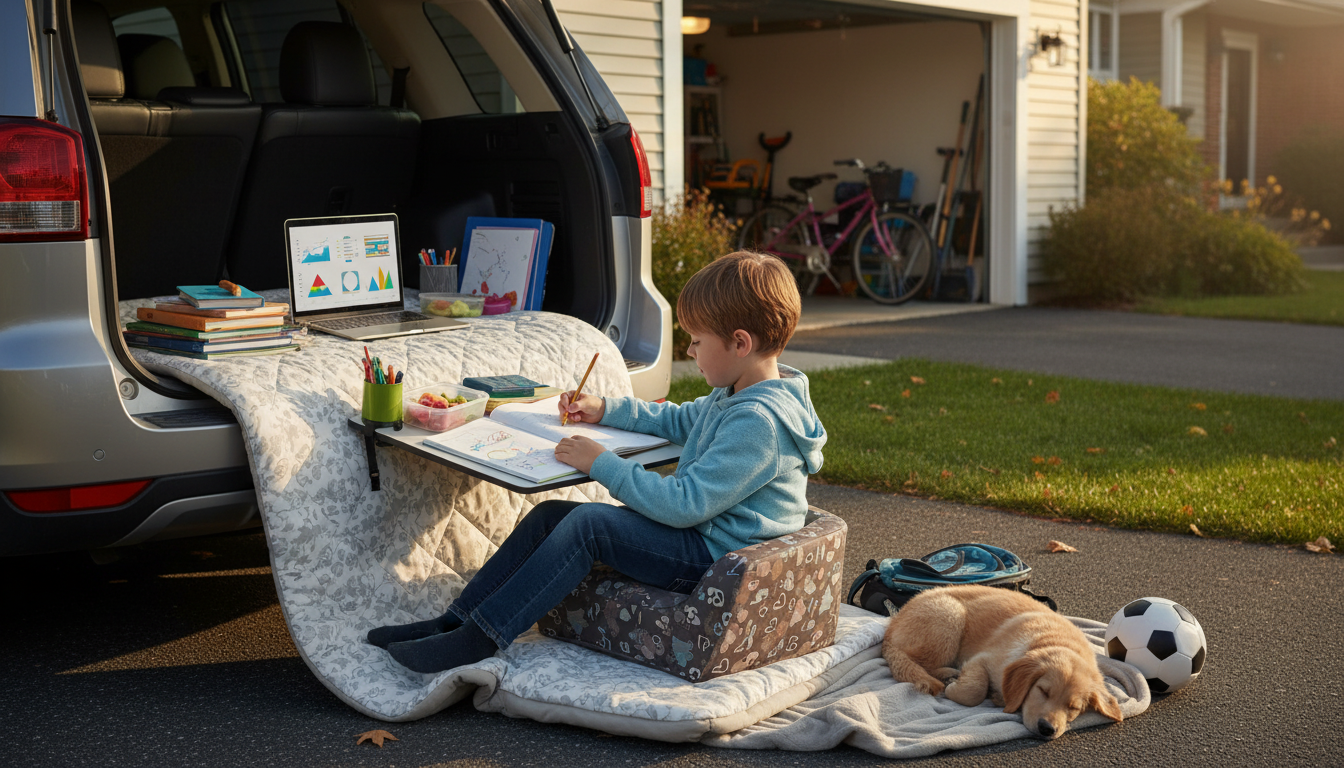
Choose one homework spot with decent lighting and a clear surface. Keep basics nearby—pencils, paper, charger, calculator—so your child doesn’t wander off and lose momentum. If screens are required, silence nonessential notifications and keep unrelated tabs closed.
Break homework into small, finishable steps
Big assignments can feel overwhelming, which leads to avoidance. Help your child identify the first tiny step (“write name and date,” “solve the first two problems,” “read one page”). A short check-in after that step builds confidence without hovering.
Use timed work sprints with planned breaks
Many kids focus better in short bursts. Try 10–20 minutes of work followed by a 2–5 minute break. During breaks, encourage stretching, water, or a quick walk—then return to the same spot to restart the next sprint.
Coach independence, not perfection
Stay available, but avoid jumping in too quickly. Ask guiding questions (“What does the direction say?” “Which problem is easiest?”) and praise effort and strategy. If focus problems are persistent across settings, consider checking in with your child’s teacher or pediatrician.
For more calming routines and practical, low-drama strategies, see the full guide here: https://favorella.com/guide-help-kids-focus-on-homework-calm-routines/.
FAQ
What’s a good homework routine for elementary school kids?
A simple routine works best: snack and movement first, then a short work block, a quick break, and another work block if needed. Keep the start time and location consistent so it becomes automatic.














Leave a comment