Stainless Steel BBQ Food Tongs: Safer, Better Grilling
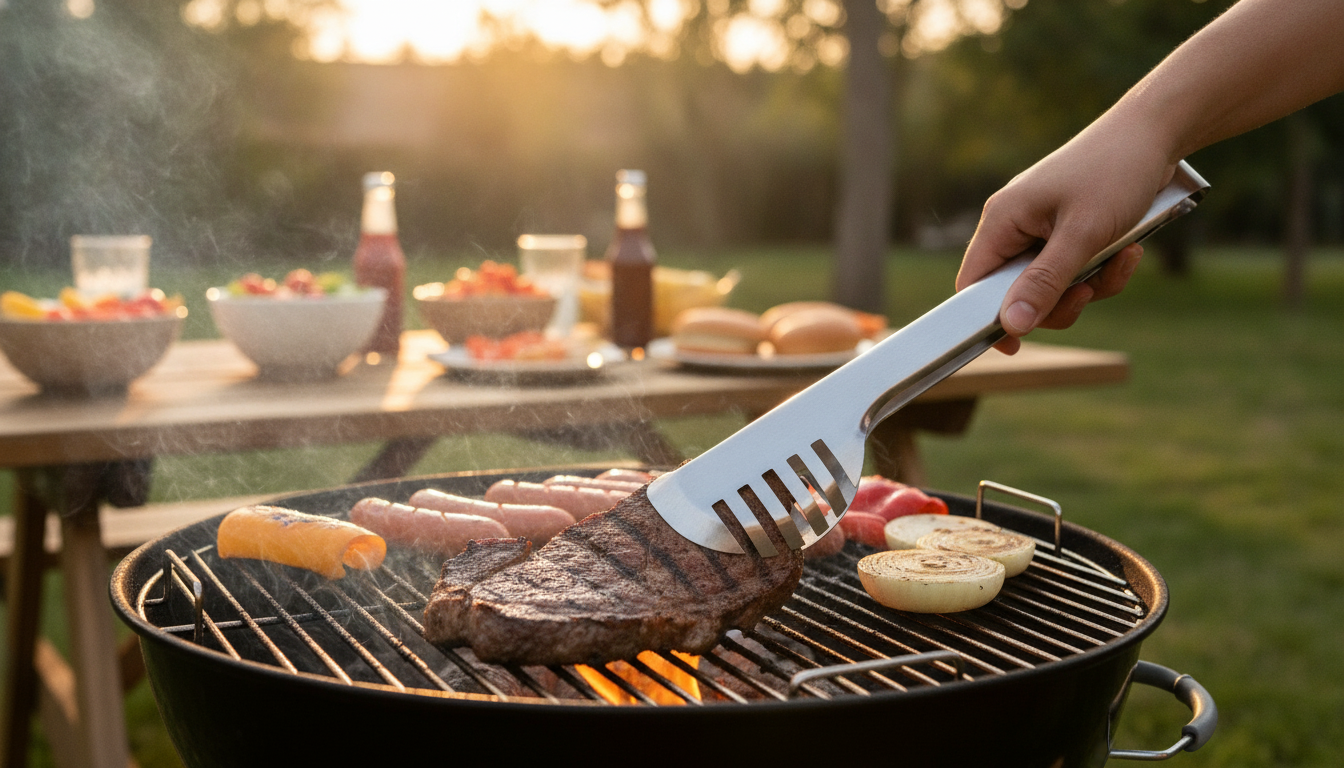
Premium Stainless Steel BBQ Food Tongs for Confident Grilling Control
Good tongs make grilling safer and more precise—helping flip delicate foods without tearing, move hot items without getting too close to the heat, and keep raw and cooked foods properly separated. Stainless steel tongs are a reliable choice for backyard BBQs, weeknight broiling, and camp-style cooking thanks to their durability and easy cleanup.
If you’re upgrading a basic utensil set or replacing an older pair with a loose hinge, a sturdy tong can quickly become the tool you reach for most. For a simple, dependable option, see Premium Stainless Steel BBQ Food Tongs.
What Makes Stainless Steel Tongs a Grilling Essential
- Better control at the grill: A secure grip helps lift, turn, and serve without slipping—especially when food is sizzling, sauced, or greasy.
- Safer distance from heat: Longer handles keep hands farther from flare-ups and hot grates, which is a big comfort upgrade during high-heat searing.
- Versatility beyond BBQ: The same tongs can handle oven trays, stovetop searing, tossing salads, plating pasta, and serving at the table.
- Durability: Stainless steel resists rust and staining when properly cleaned and dried, so it holds up well across seasons.
When cooking over open flame, you’re constantly making small adjustments—turning chicken for even browning, sliding vegetables away from a hot spot, or moving food to indirect heat. Tongs give that control without piercing meat (which can let juices escape) and without forcing you to hover too close to the fire.
Key Features to Look For Before Buying
- Handle length: Longer options are typically more comfortable for grills, smokers, and fire pits; shorter options can feel more precise for stovetop use.
- Grip and tension: A spring that feels firm (but not stiff) helps reduce hand fatigue during repeated flipping.
- Tip shape: Scalloped edges can help hold slippery foods like sausages; flatter tips can be gentler on fish and vegetables.
- Locking mechanism: A simple lock makes storage easier and keeps the tool compact in a drawer or utensil crock.
- Cleaning and care: Smooth stainless surfaces are generally easy to wash; dry after cleaning to help prevent water spots.
A good rule: choose a length that keeps your hand comfortably away from the heat, plus a tip style that matches what you cook most often. If your grill sessions include everything from burgers to asparagus to salmon, a balanced, general-purpose tong is usually the most practical starting point.
Quick Comparison: Tong Styles and Best Uses
Match tong style to what gets cooked most often (steaks vs. fish vs. vegetables). It also helps to keep a second pair on hand when cooking raw proteins and ready-to-eat foods at the same time.
| Tong type | Best for | Why it helps | Notes |
|---|---|---|---|
| Long stainless steel BBQ tongs | Grills, smokers, fire pits | More distance from high heat and flare-ups | Ideal for moving coals and repositioning large cuts |
| Scalloped-tip tongs | Sausages, wings, ribs, corn | Improved grip on rounded or glossy surfaces | Avoid puncturing meats (use tongs, not forks) |
| Flat-tip tongs | Fish, tofu, delicate vegetables | Gentler contact area reduces tearing | Pair with a fish spatula for very fragile fillets |
| Short utility tongs | Stovetop searing, serving | More precision in tight spaces | Less comfortable directly over open flame |
How to Use BBQ Tongs for Better Results
- Flip with confidence: Grip the food firmly and turn in one smooth motion to avoid tearing (especially with fish, chicken skin, and roasted vegetables).
- Reposition without squeezing: Use just enough pressure to hold food; over-squeezing can force out juices from burgers and steaks.
- Use two-zone awareness: Move food between direct and indirect heat without changing tools—sear over direct heat, then finish gently on the cooler side.
- Separate raw and cooked handling: Keep one set for raw proteins and another for cooked foods to reduce cross-contamination risk.
- Serve safely: Let food rest, then use clean tongs or a clean plate to transfer to the table.
For busy cookouts, tongs also help keep the cooking surface organized. You can pull done items to a “resting corner” of the grate, nudge flare-up zones aside, and rotate pieces so everything finishes at the same pace.
Cleaning, Storage, and Food-Safety Basics
For general cookout safety guidance—especially around preventing cross-contamination and keeping hot foods hot—see the USDA’s recommendations on Barbecue and Food Safety and the FDA’s tips for Cookouts and Picnics.
A Simple Pick for Everyday Grilling
For frequent grilling, keeping a dedicated pair for the grill (and another for kitchen prep) can simplify safe handling and make it easier to keep raw and cooked tools separate. If you want one dependable option to start with, Premium Stainless Steel BBQ Food Tongs is an easy upgrade from flimsy, short, or hard-to-control alternatives.
Planning a bigger outdoor lifestyle upgrade—like buying land where you can build a fire pit, smoker station, or outdoor kitchen? A practical resource to browse is Your Smart Guide to Investing in Rural Real Estate | Digital eBook for Beginners & Investors.
FAQ
What length tongs are best for grilling?
Longer tongs are usually best for grills and smokers because they keep your hands farther from heat and flare-ups. Shorter tongs can feel more precise for stovetop cooking or serving, so the best length depends on your setup and comfort.
Can stainless steel tongs go in the dishwasher?
Many stainless steel tongs are dishwasher-safe, but hand-washing and drying can help preserve the finish and keep the hinge working smoothly longer. Check the care details for your specific pair.
Should separate tongs be used for raw and cooked food?
Yes—using separate tongs (or washing and sanitizing between steps) helps reduce cross-contamination when grilling raw proteins and handling cooked or ready-to-eat foods. This is one of the simplest habits for safer cookouts.













Leave a comment