7L Vertical Manual Sausage Stuffer: Stainless + 5 Nozzles
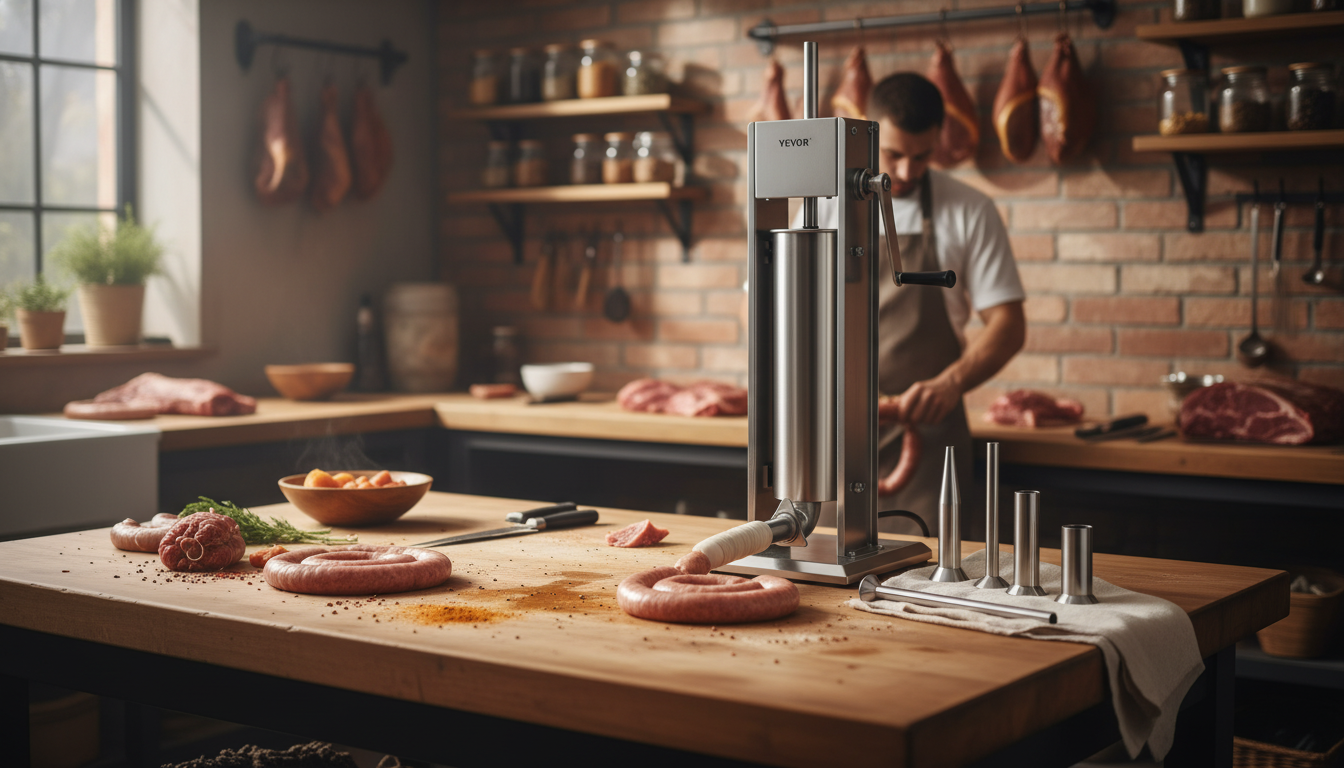
7L Manual Stainless Steel Vertical Sausage Stuffer with 5 Nozzles for Home & Commercial Kitchens
A manual vertical sausage stuffer is built for steady pressure, consistent fill, and a cleaner workflow than improvised methods. This 7L stainless steel model with five nozzles suits small-batch home projects and higher-volume prep in deli, butcher, and catering settings. When the goal is tight, even links with fewer air pockets and less mess, a dedicated vertical stuffer is one of the most practical upgrades you can make.
What a Vertical Manual Sausage Stuffer Does Well
- Keeps the cylinder upright so gravity helps feed the mixture and reduces air pockets during stuffing.
- Uses a hand crank to control pace and pressure for even fill and fewer blowouts.
- Pairs with multiple nozzle sizes to match different casings and sausage styles.
- Fits practical workflows: mix, load, purge air, stuff, twist/link, then clean.
Compared with pushing meat through a grinder tube or piping bag, a vertical stuffer is designed to compress the mixture smoothly, which helps maintain texture. That matters whether you’re working with a coarse brat-style grind or a more delicate emulsified mix where overworking can lead to “smear” and a soft bite.
Key Specs and What They Mean in Use
- 7L capacity supports larger batches with fewer reloads; useful for meal prep and service prep.
- Stainless steel contact surfaces help with durability, odor resistance, and easier sanitizing.
- Vertical design typically needs less counter depth than horizontal styles.
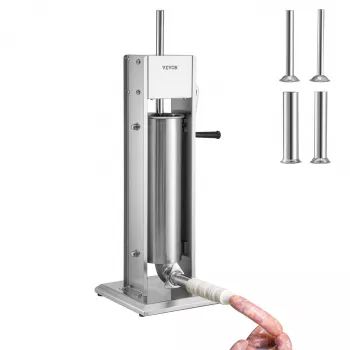
- Five nozzle options let the same stuffer handle breakfast links, bratwurst, kielbasa, snack sticks (with appropriate casing), and more.
Quick Reference: Features to Match with Your Needs
| Feature | Why it matters | Best for |
|---|---|---|
| 7L cylinder | Fewer refills and steadier production flow | Large family batches, small commercial prep |
| Stainless steel build | Easier cleaning and corrosion resistance | Frequent use, meat-heavy workflows |
| Vertical format | Stable stuffing and efficient counter use | Home kitchens, small prep tables |
| Manual crank control | Precision pressure to avoid casing rupture | Natural casings, delicate emulsions |
| 5 nozzle sizes | Fits a wider range of casings and textures | Multiple sausage styles from one tool |
Nozzle Selection Guide (Practical Matching)
- Choose the nozzle that fills the casing without forcing: too small increases backpressure; too large makes loading casings harder.
- For natural casings, smooth steady pressure and correct nozzle size reduces tearing and blowouts.
- For coarser mixes (visible fat dice, peppers, cheese), use a nozzle that won’t choke the flow.
- Keep nozzles lightly moistened before loading casings to reduce friction.
A good rule is to aim for a comfortable slide-on fit: the casing should load without a fight, but it shouldn’t feel loose enough to spin freely. If you’re adding chunky inclusions (like cheese cubes), stepping up one nozzle size can reduce resistance and keep the mix moving without sudden pressure spikes.
How to Use It: Clean Fill with Less Air
- Chill the mixture: cold meat batter flows better and stays safer during handling.
- Pack the cylinder firmly to minimize trapped air; tap the canister as it fills.
- Prime/purge: crank until a small amount extrudes, then start filling the casing.
- Use consistent speed and pressure; stop and twist/link at regular intervals instead of rushing.
- If air pockets appear, pause and prick the casing with a sterilized pin, then continue gently.
For best results, prep your station before you start: casings rinsed and ready, a clean tray for finished links, and a small bowl of water to lightly wet the nozzle. Keeping your process continuous helps prevent “start-stop” pressure changes that can cause uneven thickness.
Food safety matters during sausage making because you’re handling ground meat (more surface area, faster warming). Keep mixtures cold and follow safe handling guidance such as the USDA’s recommendations on sausage safety: USDA FSIS — Sausages and Food Safety.
Cleaning and Food-Safe Maintenance
- Disassemble immediately after use to prevent fats and proteins from drying on surfaces.
- Wash with hot soapy water; use a bottle brush for the cylinder and a narrow brush for nozzles.
- Rinse and dry thoroughly to prevent water spots and reduce risk of corrosion at joints.
- Lightly lubricate non-food-contact moving parts as recommended by the manufacturer.
- Store nozzles together to avoid losing sizes and to keep edges from being nicked.
Clean-as-you-go habits make a big difference with stuffing equipment. Once fats cool and set, they become harder to remove and can cling around seals and fittings. For general sanitation principles (wash, rinse, sanitize, air-dry), the FDA Food Code is a useful reference point for kitchen cleaning practices: FDA — Food Code (2022).
Common Stuffing Issues and Quick Fixes
Who This 7L Manual Vertical Model Fits Best
In-Stock Picks
- 7L Manual Sausage Stuffer Stainless Steel Vertical Maker with 5 Nozzles for Home & Commercial Use
- Feel Alive Again Checklist – Digital Download Self-Care Guide, Mindfulness eBook, Daily Wellness Routine, Mental Health Checklist, Quick Reset Practices
FAQ
Is a 7L manual sausage stuffer too large for home use?
No—7L is often a sweet spot for home makers who want fewer refills and steadier stuffing. It does take some storage space, but you can still run smaller batches by partially filling the cylinder and using the same controlled manual cranking.
How many nozzles are included and what are they used for?
Five nozzles are included, giving you options to match casing diameter and mixture texture. Using the correct nozzle size improves flow, reduces backpressure, and helps prevent blowouts while keeping the fill consistent.
How can air pockets be reduced when stuffing sausage?
Pack the cylinder firmly, tap it to settle the mix, and crank until a small amount extrudes before loading the casing (priming/purging). Maintain steady pressure while stuffing, and prick any small bubbles with a sanitized pin before continuing gently.















Leave a comment