3-Inch Ground Grid Stabilizer: Driveways to Patios
3″ Ground Grid Stabilizer for Driveways, Parking Lots, Patios, and Gravel Bases
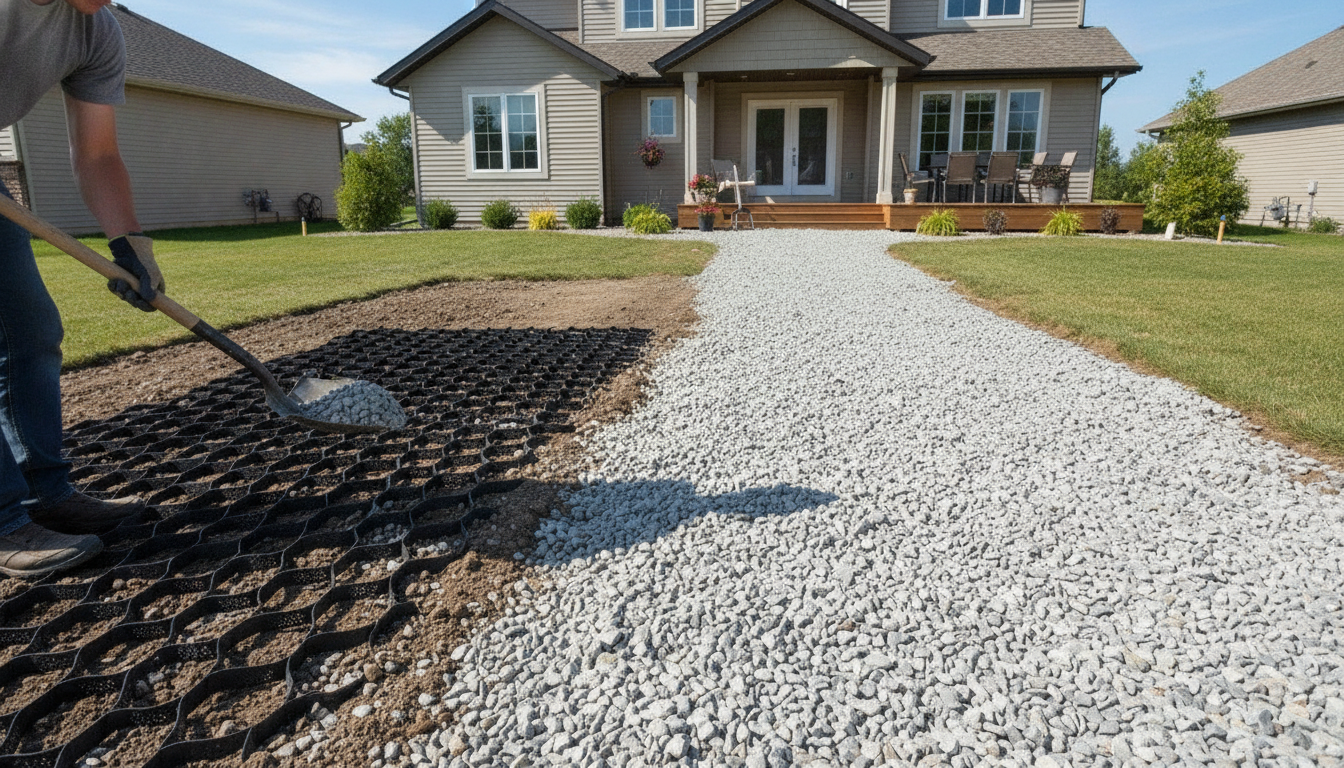
A 3-inch ground grid stabilizer creates a confined gravel layer that stays level under vehicle loads and foot traffic. By locking aggregate in place, it helps reduce ruts, washouts, and migrating stone while improving drainage and day-to-day usability for driveways, parking areas, patios, and base layers under hardscapes. For projects where a permeable, gravel-finish surface is preferred, a 3-inch cellular grid can deliver a noticeably firmer feel without turning the area into a fully hard, non-permeable slab.
What a 3-inch ground grid does
Ground grid panels are designed to manage the two biggest issues with loose gravel: lateral movement and uneven settlement. A 3-inch depth is commonly chosen for areas that see cars, light trucks, and frequent foot traffic.
- Forms a cellular structure that confines gravel laterally, limiting shifting and tire-driven displacement.
- Distributes loads across a wider area to help reduce rutting in soft or variable subgrades.
- Helps keep the surface more even, which can improve traction and make snow removal easier.
- Supports drainage by maintaining void space between stones rather than letting fines dominate the surface.
Because water management is a major factor in surface longevity, permeable systems can be a practical option when grading and runoff control are handled correctly. For background on permeable pavement concepts and stormwater benefits, see the U.S. EPA overview of permeable pavement.
Where it works best: driveway, parking lot, patio, and base layers
A 3-inch grid is often used wherever gravel is expected to stay put while still draining well. It can also make a gravel surface feel more “finished” and predictable under load.
- Driveways: stabilizes turning areas, slopes, and wheel paths that commonly develop ruts.
- Parking areas: helps resist repeated braking/turning forces that push gravel into berms.
- Patios and seating zones: provides a firmer gravel surface that feels more stable underfoot.
- Gravel base under pavers or slabs: can act as a stabilizing layer to reduce base movement when properly compacted.
- Access roads and utility paths: useful for seasonal wet conditions where traditional gravel gets churned up.
Key factors to plan before buying
The grid itself is only one part of a stable build. Performance depends heavily on site evaluation, drainage, and compaction. Soil behavior under load is especially important; the USDA NRCS provides practical guidance on soil health and compaction considerations at USDA NRCS.
- Site conditions: evaluate soil type, wetness, freeze-thaw exposure, and existing drainage paths.
- Intended loads: passenger cars vs. heavier vehicles; frequent turning and braking increases stress.
- Grid depth choice: 3-inch depth is commonly used for vehicle-bearing gravel layers when paired with proper base prep.
- Fill material: angular aggregate typically interlocks better than round pea gravel; match stone size to the cell height and local availability.
- Edge restraint: plan edging or borders to keep the stabilized area contained and prevent lateral creep at boundaries.
Installation overview for a stable gravel surface
A solid installation aims to keep water moving where it should and keep stone locked into a compacted matrix. If the subgrade is weak or moisture-prone, taking time on base prep typically pays off with fewer ruts and less regrading later.
- Excavate to the required depth for base + grid + surface layer; remove organic material and soft spots.
- Shape and compact subgrade; add a separation geotextile where soils are weak or fines migrate upward.
- Install and compact a base layer as needed, keeping consistent thickness and slope for runoff control.
- Place the 3-inch grid panels, connect sections, and ensure the grid sits flat with minimal rocking.
- Fill cells in lifts; rake level and compact to lock aggregate into the grid structure.
| Checkpoint | What to verify | Why it matters |
|---|---|---|
| Subgrade firmness | No pumping, soft spots removed, consistent compaction | Prevents settling and rutting from below |
| Slope and drainage | Surface graded to shed water; outlets not blocked | Reduces washouts and freeze-thaw damage |
| Separation layer (if needed) | Fabric laid flat with overlap; no tears | Limits mixing of soil and gravel over time |
| Grid fit and connections | Panels locked/anchored; edges restrained | Stops panel creep and edge deformation |
| Compaction of fill | Compacted in lifts; surface re-leveled | Improves stability and load distribution |
3-inch grid vs. common alternatives
Choosing between gravel stabilization, deeper base sections, or hard surfaces usually comes down to drainage goals, budget, and how the area needs to feel and perform day to day.
Maintenance and longevity tips
Product options
- 3″ Depth Ground Grid Stabilizer for Driveway, Parking Lot, Patio & Gravel Base — designed to confine gravel in a 3-inch cellular structure for improved stability and reduced rutting in vehicle and foot-traffic areas.
- Your Smart Guide to Investing in Rural Real Estate | Digital eBook — useful context for evaluating land, access, drainage, and long-term property improvements that can affect rural driveways and parking pads.
FAQ
What gravel works best inside a 3-inch ground grid?
Angular, well-graded aggregate typically interlocks best and compacts into a stable surface inside the cells. Very round pea gravel can shift more under turning tires, so it’s often less ideal unless blended or carefully compacted. Match stone size to the cell height and compact in lifts for a tighter lock.
Can a ground grid be installed over existing gravel?
Yes—if the existing gravel is clean, well-draining, and can be regraded and compacted to a firm, even layer. If it’s contaminated with fines, holding water, or hiding soft spots, it’s usually better to remove problem material, add separation fabric if needed, and rebuild to the correct depth before placing the grid.
Do ground grids prevent ruts on soft or wet soil?
They can significantly reduce rutting by confining aggregate and spreading loads, but results depend on subgrade preparation, drainage, and sufficient base thickness. On very soft or wet soils, a separation layer and additional base depth may be necessary to prevent pumping and long-term settlement.















Leave a comment