1:64 RC Drift Racing Car Guide: Indoor Slides Made Easy
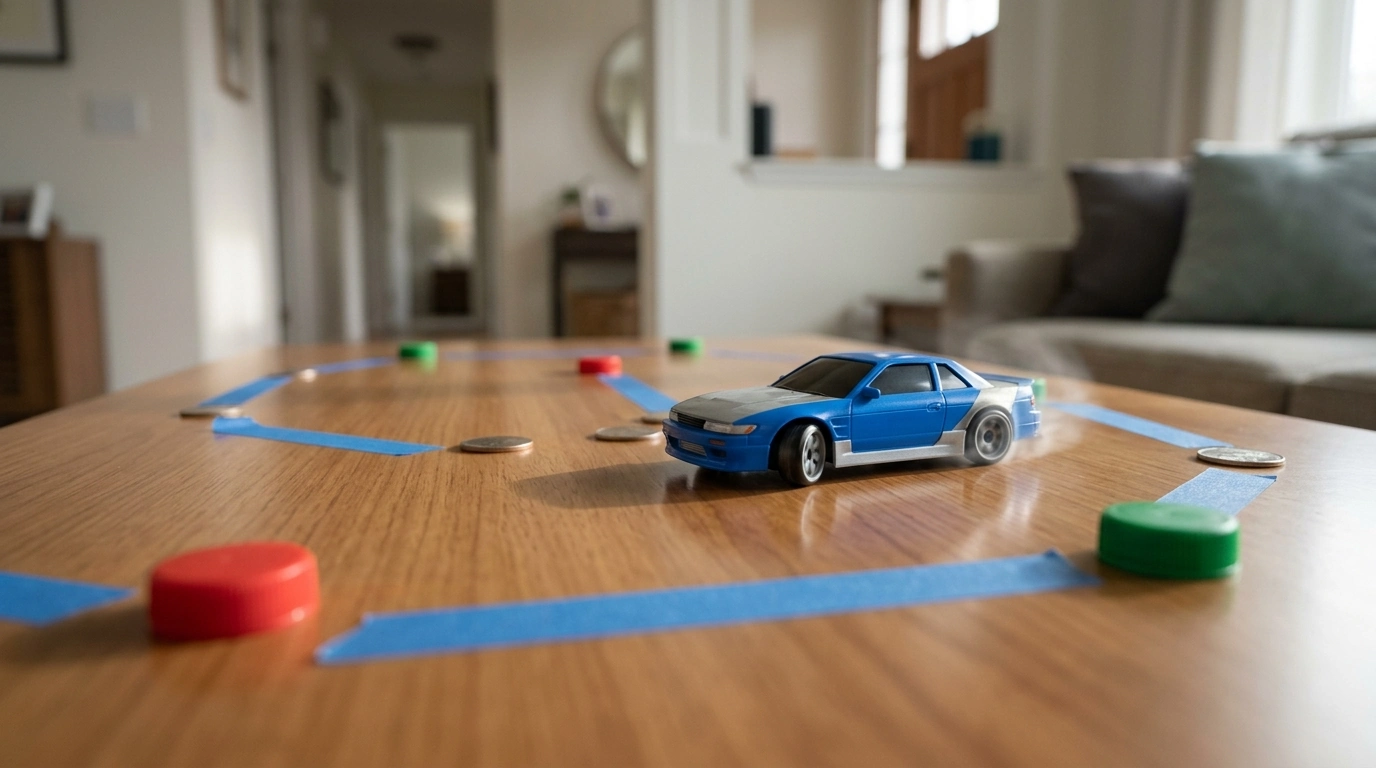
A mini drift car can turn a coffee table, hallway, or desktop track into a full drift session—no garage required. The charm of 1:64 drifting is how quickly it delivers that “just one more lap” feeling: set down a few markers, squeeze in a run, and pack it away in minutes. Below is a practical guide to what makes a small drift-ready RC feel satisfying (not twitchy), how to set up a smooth practice space, and how to build real control with simple drills. For more guidance, see Oʻahu RC car racing team prepares to blow past the competition.
What Makes a Small Drift Car Feel “Right”
At 1:64 scale, tiny changes show up fast. The best micro drifters aren’t defined by top speed; they’re defined by predictability. For further reading, see RC Drift Car 2.4 GHz 1:16 Scale 4WD High Speed Remote Control ….
- Weight balance beats raw speed: A stable chassis helps hold angle without constant mid-corner panic corrections.
- Steering precision is everything: Controlled slides depend on consistent center return and a response that doesn’t “jump” from straight to full lock.
- Tires and surface pairing drive the experience: Hard plastic drift tires tend to shine on smooth floors; rough or grippy surfaces can cause chatter and sudden snap-back.
- Throttle control at low speed matters most: Smooth low-end modulation is what lets you link corners in a living room without pinballing off chair legs.
- Short wheelbase technique is the whole game: Expect quick transitions, tight donuts, and compact figure-eights—perfect for small layouts.
It helps to remember that “scale” is literally about proportion. If you’re curious about how measurement and scale are defined in general, ISO’s overview of quantities and units is a useful reference: International Organization for Standardization (ISO) — ISO 80000-1.
Quick Look: 1:64 Mini RC Drift Racing Car
If the goal is quick indoor practice—initiation, holding angle, and clean transitions—the 1:64 Mini RC Drift Racing Car is built for exactly that kind of micro-course fun. It’s sized for drifting on tile, sealed wood, laminate, or smooth tabletop surfaces, and it encourages the fundamentals because everything happens in a small footprint.
| Item | Detail |
|---|---|
| Product | 1:64 Mini RC Drift Racing Car |
| Scale | 1:64 |
| Price | $25.51 |
| Availability | In stock |
| Best for | Indoor drifting and skill practice in small spaces |
| Where to buy | Favorella product page |
For the most satisfying feel, pair a mini drift car with a simple at-home micro course—tape lines for boundaries, bottle caps for clipping points, and a smooth “runway” for transitions.
Setting Up an Indoor Drift Space in 10 Minutes
You don’t need a dedicated room. You need a consistent surface, a layout that repeats well, and markers that won’t launch the car.
- Pick the smoothest surface available: Tile, laminate, and sealed wood usually work great. Quick sweep or wipe first; dust and hair change grip corner-to-corner.
- Build a simple layout: A large oval, one hairpin, and one transition zone is enough to practice linking and control.
- Use low-profile markers: Painter’s tape, flat coins, and bottle caps keep the car sliding rather than hopping.
- Create a start box: Run 5 clean laps and focus on consistency (staying inside lines, smooth angle) instead of maximum speed.
- Increase difficulty gradually: Narrow the gates, extend hold zones, and try reverse-direction runs once the line feels repeatable.
Drifting is ultimately about controlled sliding, which comes down to friction between tire and surface. For a solid plain-English overview of friction and why sliding behavior changes so much from one surface to another, see: Britannica — Friction.
Driving Techniques That Improve Fast at 1:64 Scale
Micro drifting rewards gentle inputs. Big steering and heavy throttle usually create instant spinouts, while small, early corrections keep the car “in the drift.”
- Feather the throttle: Use short bursts to initiate, then settle into steady partial throttle to maintain angle through the arc.
- Countersteer early, not big: A quick, small correction often saves a slide better than cranking full opposite lock after the rear breaks loose.
- Use “set and hold” for hairpins: Initiate, countersteer to lock a comfortable angle, then modulate throttle to ride the curve without widening into obstacles.
- Train transitions with a figure-eight: Aim for one smooth S-shaped path. If it feels like two separate turns, slow the entry and focus on timing.
- Standardize your approach speed: Choose one repeatable entry pace per corner; consistent entries create consistent exits, which is where clean linking lives.
Maintenance and Care for Micro RC Drift Cars
Small cars are tough, but the parts are also small—so a little care goes a long way toward keeping handling consistent.
Gifting and Collecting: Why 1:64 Drift Cars Are Addictive
If you’re building a small gift bundle, consider pairing the car with a non-hobby digital add-on for downtime between runs, like Soulful Success Checklist or Your Smart Guide to Investing in Rural Real Estate.
FAQ
What surface works best for drifting a mini RC car indoors?
Smooth, hard surfaces like tile, laminate, or sealed wood usually provide the most predictable sliding. Dusty, textured, or grippy surfaces can cause chatter and sudden grip changes that make the car feel inconsistent.
How can spinouts be reduced while learning to drift?
Reduce entry speed, use smaller steering corrections, and focus on gentle throttle modulation rather than full-on bursts. A simple figure-eight drill helps you learn timing for transitions without overcorrecting.
Is 1:64 scale too small to be controllable?
No—on the right surface, 1:64 can feel very controllable. The small scale just rewards smoother inputs and a tighter, more intentional practice layout.













Leave a comment