100W Magnetic USB-C Cable: Fast Charging for iPhone 15
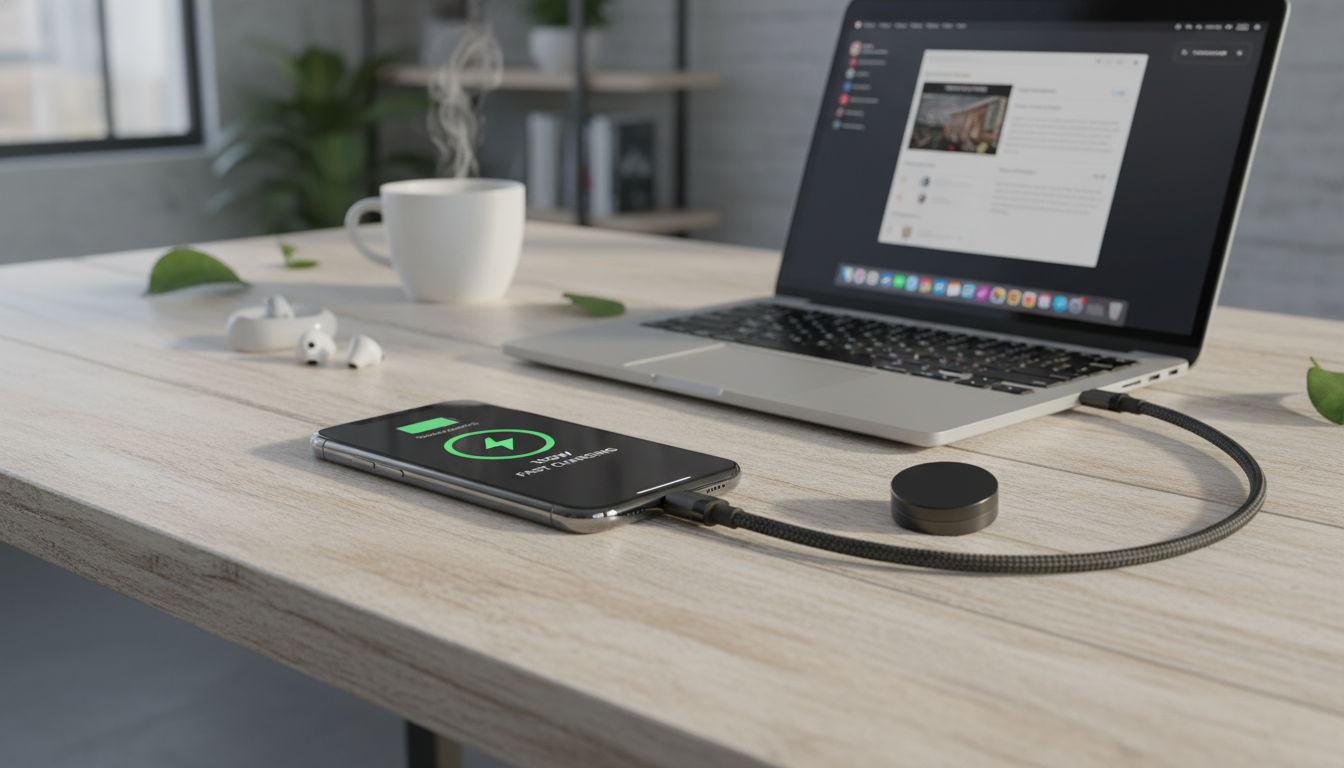
100W USB‑C to USB‑C Magnetic Fast Charging Cable for iPhone 15, Laptops, and Everyday Gear
A reliable USB‑C to USB‑C cable should do three things well: charge fast, stay connected, and hold up to daily use. A magnetic design adds convenience by reducing accidental yanks and keeping the connector aligned, while 100W support makes it suitable for phones, tablets, and many USB‑C laptops. This guide breaks down what to expect from a 100W magnetic USB‑C cable, how to match it to chargers and devices, and where it fits best in a travel or desk setup.
What a 100W magnetic USB‑C cable is designed to do
A 100W magnetic USB‑C to USB‑C cable is built for a modern USB‑C ecosystem where one cable can handle quick phone top-ups and serious laptop charging—without the everyday annoyance of fumbling for the connector.
- Delivers high power output for compatible devices: up to 100W (typically 20V/5A) when paired with a USB‑C Power Delivery charger that supports those profiles.
- Magnetic coupling aims to make connect/disconnect easier, especially when charging frequently at a desk, in a car, or beside the bed.
- Helps reduce wear on ports by lowering the force transferred to the device during tugs or bumps.
- Supports modern USB‑C devices such as iPhone 15 series, iPad with USB‑C, Android phones, power banks, handheld consoles, and many USB‑C laptops.
Charging performance: what “100W” means in real use
The “100W” label is a ceiling, not a promise that every device will charge at 100W. USB‑C charging speed is negotiated between the charger and the device, with the cable acting as the safe conduit for that negotiated power.
- The cable’s wattage rating indicates its maximum safe power handling; actual charging speed depends on the device and charger negotiating a supported USB Power Delivery (PD) profile.
- Phones typically draw far less than 100W (often 15–30W range depending on model and protocol), while laptops can draw 45W, 65W, 90W, or up to 100W on supported setups.
- To reach higher wattage, the charger must support the needed PD profile, and the cable must be rated for 5A operation (many high-power USB‑C cables use an E‑Marker chip for proper negotiation).
- If a laptop expects 65W but the charger or cable is limited, charging may be slower or the battery may drain under heavy load.
| Device type | Common charging range | Best-match charger | Notes |
|---|---|---|---|
| iPhone 15 (USB‑C) | ~15–27W | 20–30W USB‑C PD | Fast charging depends on PD support and battery state |
| iPad / tablets | ~20–45W | 30–45W USB‑C PD | Bigger tablets benefit from higher wattage |
| Ultrabook laptops | ~45–65W | 65W USB‑C PD | Good for everyday work and travel |
| Performance laptops (USB‑C charging capable) | ~90–100W | 100W USB‑C PD | May require specific USB‑C PD profiles; some laptops need proprietary adapters |
Compatibility essentials: chargers, devices, and protocols
Most “charging problems” come down to mismatch: the charger doesn’t speak the right protocol, the cable isn’t rated for the power level, or the device caps its input. Getting consistent fast charging is mostly about aligning these pieces.
- USB‑C to USB‑C is required for USB‑C Power Delivery fast charging; older USB‑A chargers usually cannot deliver high-watt PD output.
- A PD-capable wall charger or power bank is needed to take advantage of fast charging on most modern devices.
- Some devices support additional fast-charge standards; when in doubt, PD is the broadest cross-brand baseline for USB‑C devices.
- Data capabilities can vary by cable; some focus on power delivery rather than high-speed data transfer. If external SSD speeds or video output are required, confirm the cable supports the needed USB version/Alt Mode.
For deeper background on how PD negotiation works and why profiles matter, the USB‑IF overview of USB Power Delivery and the official USB Type‑C resources are helpful references. For Apple devices, Apple’s official guidance on USB‑C power adapters and charging can clarify which adapters and wattages make sense for iPhone and iPad.
Magnetic design: convenience benefits and practical limits
Safety and durability checkpoints before daily use
Best use cases: desk, travel, and multi-device setups
Product options in stock
- 100W USB‑C to USB‑C Fast Charging Magnetic Cable for iPhone 15, Laptop & More — a budget-friendly option for a USB‑C ecosystem that benefits from quick docking and broad device coverage.
- Feel Alive Again Checklist – Digital Download Self-Care Guide, Mindfulness eBook, Daily Wellness Routine, Mental Health Checklist, Quick Reset Practices — a lightweight add-on for travel days: a quick reset routine pairs well with a streamlined “one cable, one charger” kit.
- New Balance Men’s Green Cotton T-shirt with Pocket — an easy packable basic for commuting or travel, especially when you’re optimizing what you carry.
FAQ
Will a 100W USB‑C cable charge an iPhone 15 faster than a lower-watt cable?
Not by itself. iPhone 15 will only draw the power it can negotiate with a compatible USB‑C PD charger, but a 100W-rated cable provides headroom and can help ensure stable PD negotiation with higher-capability chargers.
What charger is needed to reach higher wattage like 65W or 100W?
Use a USB‑C Power Delivery (PD) charger rated at or above the wattage you’re targeting. For 100W, both the charger and cable should support the needed PD profile (commonly 20V/5A on supported setups).
Are magnetic charging cables safe for laptops?
They can be safe when paired with a quality USB‑C PD charger and used with a clean, fully seated connection. Watch for heat during high-watt charging, avoid lateral strain on the magnetic joint, and stop using the cable if the connection becomes intermittent.















Leave a comment