Pet Food Labels Made Simple: Spot Quality Nutrition

Decoding Pet Food: How to Identify Quality Nutrition
Choosing a pet food gets easier when the label stops feeling like a puzzle. With a simple, repeatable checklist, it becomes much faster to spot complete-and-balanced formulas, interpret ingredients and guaranteed analysis, and sidestep common marketing shortcuts—so daily meals better match a pet’s life stage, health needs, and preferences.
Start with the “complete and balanced” proof
The most important line on any pet food package is the nutritional adequacy statement. It’s usually near the guaranteed analysis or feeding directions, and it tells you whether the food is intended to be a primary diet.
- Find the adequacy statement and confirm it says the food is “complete and balanced.”
- Prefer foods that meet AAFCO nutrient profiles for the correct life stage, or that passed AAFCO feeding trials (feeding trials provide extra real-world reassurance).
- Match life stage precisely: puppies/kittens and pregnant or nursing pets need higher energy and different nutrient levels than adults; seniors may need different calorie density and nutrient targets based on health and body condition.
- If the label says “intermittent or supplemental”, treat it like a topper or treat—not the main food.
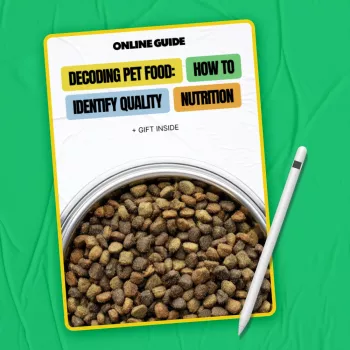
For a deeper walkthrough you can keep on hand, see Decoding Pet Food: How to Identify Quality Nutrition | Pet Nutrition Guide for Pet Parents.
Read the ingredient list like a detective
Ingredient lists can be helpful, but they’re easy to misread. Ingredients are listed by weight before cooking, and fresh meats contain a lot of water—so “chicken” may appear first even when the finished diet isn’t especially high in animal protein.
- Look for clearly named animal proteins (chicken, turkey, salmon, beef) and/or specific meals (like chicken meal) rather than vague terms such as “meat” or “animal fat.”
- Carbs aren’t automatically “bad.” What matters is digestibility, calorie density, and whether the formula fits your pet’s activity level and appetite.
- Scan for functional additions that often support complete nutrition (added vitamins/minerals, omega-3 sources like fish oil, and appropriate fiber sources).
- Be cautious with long “exotic” ingredient lists that look impressive but don’t clearly improve nutrient balance or digestibility.
Quick label scorecard: what to look for vs. what to question
| Label element | Better signs | Question marks | Why it matters |
|---|---|---|---|
| Nutritional adequacy | AAFCO statement for the right life stage; feeding trial noted | No AAFCO statement; “supplemental only” | Confirms minimum nutrient standards for the intended use |
| Protein source wording | Named meats/meals (e.g., chicken, chicken meal) | “Meat,” “animal by-product” (unspecified) | Specific sourcing improves transparency and consistency |
| Fats | Named fats/oils (chicken fat, salmon oil) | “Animal fat” (unspecified) | Fat type influences palatability and fatty acid profile |
| Calorie information | kcal per cup/can/kg listed | No calorie disclosure (or hard to find) | Helps prevent overfeeding and supports weight management |
| Claims | Modest, specific claims tied to nutrients (omega-3s for skin/coat) | “Human-grade,” “premium,” “holistic” without details | Buzzwords don’t guarantee formulation quality |
Use the guaranteed analysis the right way
The guaranteed analysis (GA) shows minimum crude protein and crude fat, plus maximum crude fiber and moisture. It’s useful—but it doesn’t tell you digestibility, ingredient quality, or whether a food is appropriate for your individual pet.
- Compare on a dry-matter basis when moisture is very different (kibble vs. canned). High moisture can make protein and fat look “lower” on the label than they effectively are.
- Higher protein isn’t always better. Activity level, life stage, and medical conditions can change what “ideal” looks like.
- Watch very high fat for pets prone to pancreatitis or those needing weight control, and make sure calories match realistic portion sizes.
Check for formulation rigor and manufacturer transparency
Two foods can look similar on the label and perform very differently in the real world. Transparency and quality control help separate consistent diets from gamble-worthy ones.
- Confirm a clear manufacturer identity and easy-to-find contact information.
- Look for qualified nutrition expertise (such as a board-certified veterinary nutritionist or PhD animal nutritionist involved in formulation).
- Ask about quality control testing: ingredient testing, finished product nutrient analysis, and pathogen screening are strong signs of seriousness.
- Consider recall history with context: speed of response and corrective actions matter more than headlines alone.
Helpful references for evaluating labels and brand practices include AAFCO’s label reader, the WSAVA Global Nutrition Toolkit, and the FDA pet food safety and recalls page.
Match the food to the pet, not the trend
Spot common red flags and misleading shortcuts
Transitioning and monitoring: the final quality check
A simple checklist to keep on hand
Related digital downloads
- Decoding Pet Food: How to Identify Quality Nutrition | Pet Nutrition Guide for Pet Parents
- Your Smart Start Checklist for Commercial Property Success – Commercial Property Investment Guide
- Your Smart Guide to Investing in Rural Real Estate | Digital eBook for Beginners & Investors
FAQ
Does the first ingredient being meat mean the food is high quality?
No. Ingredients are listed by weight before cooking, and fresh meat contains lots of water, which can push it to the top even if the finished food isn’t especially high in animal protein. AAFCO adequacy for the right life stage, calorie disclosure, and manufacturer quality control are more reliable indicators than a single ingredient position.
How can kibble and canned food be compared fairly?
Compare protein and fat on a dry-matter basis because canned foods contain much more moisture. Also use kcal information (kcal per cup/can/kg) to compare feeding amounts and cost per calorie, which is often the most practical “apples-to-apples” measure.
What’s the quickest way to tell if a food is complete for my pet’s life stage?
Find the AAFCO nutritional adequacy statement and confirm it matches your pet’s life stage (growth, adult maintenance, or all life stages). Foods that passed AAFCO feeding trials add another layer of confidence beyond formulation alone.















Leave a comment