Automatic Car Wash Guide: Touchless vs Soft-Touch
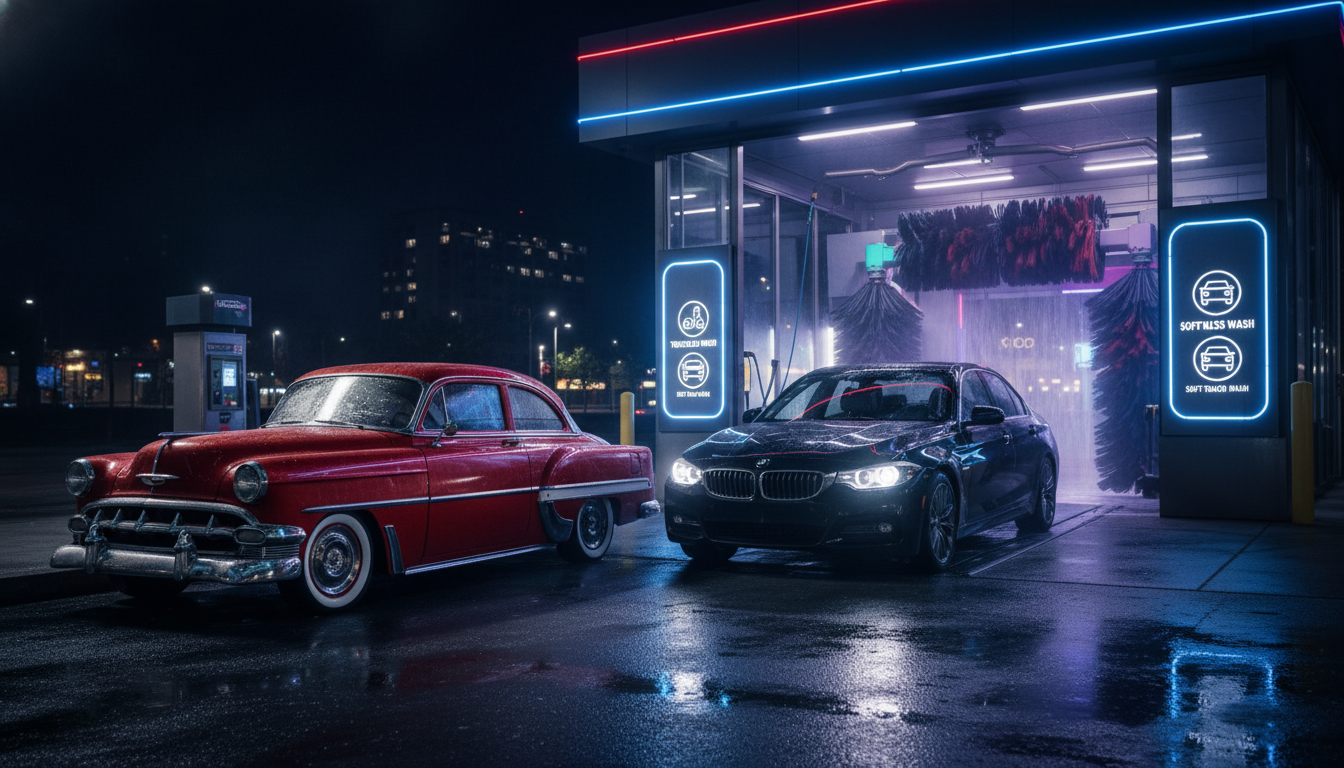
Shine Smart or Skip It: A Practical Guide to Automatic Car Washes and Smarter Car Care
Automatic car washes are a modern convenience that can genuinely support paint health—if you choose the right type for the situation and avoid paying for extras that don’t match your car’s needs. The best approach isn’t “always touchless” or “never brushes.” It’s a practical routine: remove grime before it bakes in, reduce scratching risk where it matters, and add protection on a schedule that fits real life.
Start With the Goal: Clean, Protect, or Save Time
Before selecting a menu option, decide what you’re solving today. A quick rinse for road film is different from a true clean after a highway trip, and both are different from adding protection before rough weather.
- Clean: If you’re dealing with bugs, sap mist, oily traffic film, or winter salt, focus on a wash that actually removes contamination (and consider a pre-soak).
- Protect: If weather is about to turn—freeze/thaw, heavy rain, or intense sun—light protection can reduce how hard the next wash has to work.
- Save time: When the alternative is letting grime sit for weeks, a basic automatic wash is often the smart “good enough” choice.
Risk level matters. Darker paints and softer clear coats tend to show micro-scratches sooner, while neglected paint holds grit that turns every wash into sandpaper. A realistic cadence helps: frequent gentle washes usually beat occasional aggressive ones.
Automatic Car Wash Types: What You’re Trading Off
Each wash style is a trade: cleaning power vs. contact risk vs. how much effort you’ll need afterward.
Touchless washes
No brushes or cloth means lower abrasion risk, which is especially helpful if your paint already shows swirls. The downside is that some touchless systems struggle with oily film or heavy bug buildup unless the chemistry and dwell time are strong.
Soft-touch/brush washes
Cloth or foam media typically cleans better in one pass, especially on heavier grime. The risk is that the media can hold grit—particularly at high-volume locations or places with inconsistent maintenance—creating fine swirls over time.
Conveyor tunnel vs. in-bay automatic
Tunnels are fast and can be consistent at a well-run facility, but quality varies widely. In-bay automatics can be gentler on mirrors and trim if calibrated well, though they may be less effective on thick grime without a good pre-rinse.
When to avoid automatic washes
- Fresh paint that hasn’t fully cured
- Delicate wraps or edges that are lifting
- Loose trim, damaged mirror caps, or brittle antennas
- Cracked wiper blades that could snag or smear debris
- Compromised clear coat (peeling/oxidation) that can worsen with harsh chemicals
Quick comparison of common automatic wash options
| Wash type | Best for | Main downside | Smart default choice |
|---|---|---|---|
| Touchless | Frequent maintenance washes; winter salt removal | May not fully remove oily film/bugs | Choose when paint condition is priority |
| Soft-touch (cloth/foam) | Heavier dirt; quicker “looks clean” results | Higher chance of micro-scratches | Use when you plan to protect/maintain paint afterward |
| Conveyor tunnel | Fast throughput; consistent if well-run | Quality varies by location; add-ons upsold | Pick reputable sites with visible maintenance |
| In-bay automatic | Controlled process; good for smaller sites | May be less effective on heavy grime | Pair with pre-rinse when very dirty |
A Simple Checklist Before Selecting a Wash
For environmental considerations, commercial washes often handle wastewater more responsibly than driveway washing. The EPA explains why runoff matters and how professional facilities help reduce impact: Frequent Questions About Car Washing and Water Runoff.
Add-Ons That Are Worth Considering (and Those That Usually Aren’t)
Busy-Driver Maintenance Rhythm: Minimal Effort, Maximum Payoff
Tire pressure is a low-effort habit that pays back in safety and fuel economy. The U.S. Department of Energy’s guidance is a useful reference: Tire Pressure (Fuel Economy Guide). When winter weather hits, NOAA’s preparedness resources can help with planning around freezes and storms: Winter Weather Safety and Preparedness.
A Smarter Car Care Checklist for Decision-Making
Helpful downloads from our store
- Shine Smart or Skip It – Automatic Car Wash Guide, Smart Car Care Checklist, AI-Driven Vehicle Maintenance eBook for Busy Drivers ($3.99)
- Feel Alive Again Checklist – Digital Download Self-Care Guide, Mindfulness eBook, Daily Wellness Routine, Mental Health Checklist, Quick Reset Practices ($5.99)
FAQ
Is a touchless automatic wash actually safer for paint?
Generally yes, because there’s no contact media dragging grit across the surface, which lowers the risk of micro-scratches. The trade-off is that touchless systems may rely on stronger chemicals and sometimes leave behind traffic film if the car is heavily soiled.
How often should an automatic wash be used in winter?
A practical cadence is about every 1–2 weeks in typical winter conditions, and more often during heavy salting or slushy weeks. Prioritize an undercarriage rinse and don’t let salt sit for long stretches if you want to reduce corrosion risk.
Do “ceramic” add-ons at automatic washes provide real protection?
Most are spray sealants or quick boosters that can improve water beading for a short time, but they’re not comparable to a true professional ceramic coating. Performance varies a lot based on the product and how well it’s applied and dried.
















Leave a comment