Anxiety Relief Bundle: Mindfulness, Prompts & Checklist
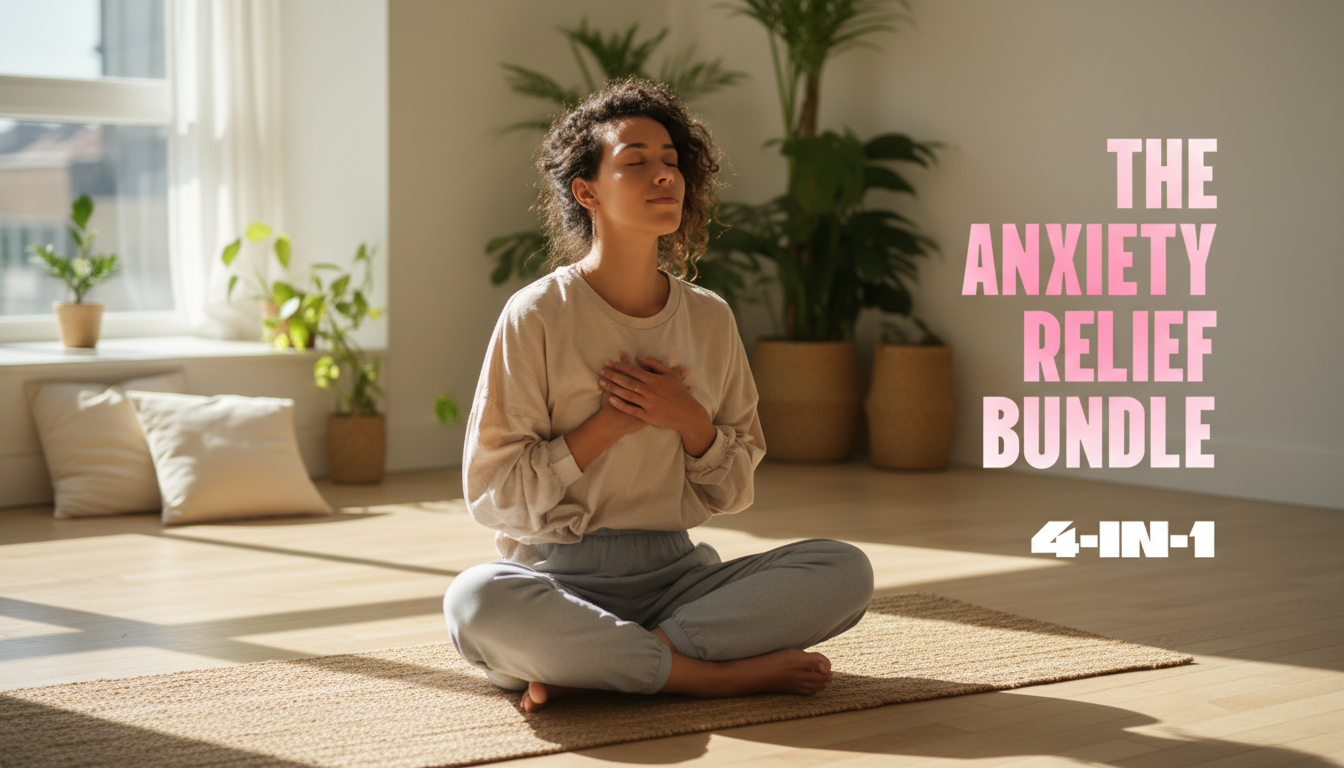
Meet The Anxiety Relief Bundle: A Path to Calm (4-in-1 Bundle)
Daily anxiety can feel unpredictable, especially when stress shows up in the body, thoughts, and routines all at once. A structured toolkit can help by pairing calming practices with clear steps that are easy to repeat. The Anxiety Relief Bundle: A Path to Calm (4-in-1 Bundle) brings four complementary resources together—mindfulness exercises, positive thinking prompts, a printable checklist, and a course-style outline—so progress feels practical, trackable, and supportive.
Instead of trying to remember “the right thing to do” when your nervous system is already activated, you get a simple sequence: regulate first, then reframe, then reinforce the habit. That blend aligns with widely recommended stress and anxiety self-management approaches (see the American Psychological Association guidance on stress management and the National Institute of Mental Health overview of anxiety disorders).
What’s Included in the 4-in-1 Bundle
- Mindfulness exercises designed to downshift the nervous system with simple, repeatable practices.
- Positive thinking activities that help challenge unhelpful thought loops and reframe daily stressors.
- A printable checklist for quick guidance during anxious moments and for tracking consistency over time.
- A course outline that organizes the materials into a clear sequence, helping turn “good intentions” into a routine.
Bundle Components at a Glance
| Component | Best for | How to use it |
|---|---|---|
| Mindfulness Exercises | Body-based calming and grounding | Use 5–10 minutes during transitions (morning, breaks, bedtime) |
| Positive Thinking Prompts | Reducing catastrophic thinking and self-criticism | Complete 1 prompt when stress spikes or as an evening reflection |
| Printable Checklist | Fast decisions when overwhelmed | Print and keep visible; check items off during a “reset” |
| Course Outline | Consistency and structure | Follow the sequence weekly or revisit modules as needed |
Who This Bundle Fits Best
- People who want guided steps instead of trying to piece together techniques from multiple places.
- Anyone juggling busy schedules who needs short practices that still feel meaningful.
- Those who benefit from checklists, structure, and visible progress markers.
- Beginners to mindfulness or cognitive reframing who want approachable, low-pressure exercises.
This format is especially helpful for “high-functioning anxiety” patterns—where life keeps moving, but the mind and body stay in a near-constant state of tension. When you already feel overloaded, having a pre-built order of operations can remove friction and reduce decision fatigue.
A Simple Weekly Rhythm (Without Overhauling Your Life)
- Start small: choose one mindfulness exercise and repeat it daily for a week before adding more.
- Pair the checklist with a consistent trigger (after waking, lunch break, or pre-bed) to build habit strength.
- Use positive thinking prompts as a “thought reset” after stressful events—keep it brief and specific.
- Follow the course outline as a path, not a test: revisit earlier steps whenever anxiety ramps up.
A helpful way to keep the routine sustainable is to set a “minimum effective practice.” For example: 3 minutes of grounding plus 1 short prompt. If you do more, great—but the baseline stays small enough that it’s realistic on hard days, not just good days.
Using the Printable Checklist During an Anxiety Spike
- Scan for basics first: hydration, nutrition, movement, and a short breathing/grounding exercise.
- Choose one action that reduces intensity quickly (a short mindfulness exercise is often enough to create space).
- After the body settles, use a positive thinking prompt to address the thought pattern behind the spike.
- Mark what helped; the checklist becomes personalized over time by revealing patterns that work.
When anxiety rises, the goal isn’t to “win an argument” with your thoughts immediately. It’s to reduce intensity enough to regain choice. The checklist supports that by nudging you toward stabilizers first (breath, body, environment), then toward reflection once you’re more resourced.
Mindfulness + Positive Thinking: Why the Combination Helps
- Mindfulness supports present-moment awareness, helping reduce reactivity and improve emotional regulation.
- Positive thinking exercises (when grounded in realism) can challenge distortions like catastrophizing and all-or-nothing thinking.
- Together, they cover both pathways: calming the body and reshaping the mental narrative that fuels anxiety.
- The course outline makes the pairing easier by creating a repeatable order: regulate first, then reframe.
Mindfulness can help you notice, “My chest is tight and my thoughts are racing,” without immediately treating that experience as danger. Then reframing can help you respond to the story anxiety is telling—without forcing toxic positivity. If you want additional general self-help strategies for anxious days, the NHS also summarizes practical options in its self-help for anxiety guidance.
Tips to Get the Most Value from the Bundle
Related Resource for Quick Daily Resets
Consider pairing the bundle with Feel Alive Again Checklist – quick reset practices for moments when you want a fast glance-and-go plan—especially during busy workdays, travel, or packed family schedules.
FAQ
How quickly can this kind of bundle help with anxiety?
Some people feel calmer after a single mindfulness session, especially when anxiety is primarily body-based in the moment. Longer-lasting change usually comes from consistent practice over several weeks, using small steps and tracking what improves recovery time and daily functioning.
Is this suitable for beginners who have never tried mindfulness or reframing exercises?
Yes. The materials are structured and approachable, and starting with short exercises keeps it low-pressure. Using the checklist as a guide and moving through the course outline gradually can help you build confidence without getting overwhelmed.
Can this replace therapy or medical care?
No. It’s a self-guided support tool that can complement professional care, not replace it. If symptoms are severe, worsening, or involve safety concerns (like panic attacks or inability to function), reaching out to a qualified professional is important.














Leave a comment