Mini Golf for Beginners: First-Round Checklist & Tips

Mini Golf Beginner’s Checklist: Easy Step-by-Step Guide for First-Time Players
Mini golf is easiest when the basics are handled before the first tee: what to bring, how a course flows, simple putting fundamentals, and a plan for keeping score and pace. This checklist-style guide breaks the experience into small steps that make the first round feel relaxed, social, and surprisingly skillful.
Quick start: the 10-minute plan before arriving
- Pick a low-crowd time (weekday evenings or early mornings) to reduce waiting and pressure.
- Wear comfortable shoes with grip; avoid slick soles.
- Bring a small water bottle and a light layer if the course is outdoors.
- Decide the vibe: casual fun, friendly competition, or practice-focused—set expectations before the first hole.
- If playing with kids: pack a small snack and plan short breaks between holes if needed.
- Charge your phone if you want photos, but keep it away while putting to stay focused.
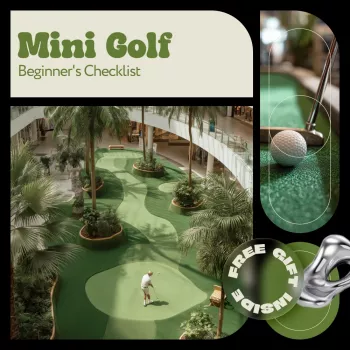
If you want a one-page version you can keep on your phone, Mini Golf Beginner’s Checklist (printable + digital) is built for quick “did we forget anything?” moments.
What to bring (and what to skip)
- Must-haves: comfortable shoes, water, sunscreen (outdoor), and a pen for scorekeeping if the venue doesn’t provide one.
- Nice-to-haves: hat/visor, small towel (for sweaty hands), and hand sanitizer (shared equipment).
- Skip: bulky bags, loud speakers, and anything that could distract players behind you.
- Check course rules: some venues restrict outside food/drinks, tripods, or certain footwear.
Mini Golf Essentials Checklist
| Item | When it matters most | Simple tip |
|---|---|---|
| Comfortable shoes | Every course | Choose grip over style—avoid slick soles |
| Water | Outdoor / warm days | Small bottle is enough for 18 holes |
| Sunscreen | Outdoor midday | Apply before arrival; reapply if lingering |
| Hat/visor | Bright sun | Helps keep eyes on the ball |
| Light layer | Evenings / breezy courses | A thin hoodie beats a bulky jacket |
| Pen or score app | Group play | Assign one scorekeeper to keep things moving |
Course flow: how a round works
- Start on hole 1, wait until the group ahead clears the putting area, then play.
- Take turns in a consistent order (scorecard order or clockwise).
- Keep pace: while others putt, visualize your line and pick your target.
- If a ball leaves the playing surface, follow the course rule (often a designated drop zone or a small penalty).
- Respect the group behind you: finish the hole, record scores, then move to the next tee before chatting.
Mini golf is casual, but the best rounds still follow basic golf etiquette—especially pace of play. For a deeper reference on courtesy and keeping things moving, see the R&A Rules of Golf resources and the USGA Rules of Golf.
Beginner putting fundamentals that work on most holes
- Grip: hold the putter lightly—tight hands create jerky strokes.
- Stance: feet shoulder-width, ball slightly forward of center, eyes over the ball if comfortable.
- Stroke: rock shoulders, keep wrists quiet, and aim for a smooth back-and-through motion.
- Speed first, line second: a great line with the wrong speed still misses; prioritize pace to finish near the cup.
- Pick a target: aim at a specific spot (edge of a ramp, a seam, a mark) rather than “the hole.”
- Use bank shots intentionally: on curved rails, a gentle bank can be safer than trying to squeeze through a narrow opening.
A simple way to build confidence fast: on the first few holes, pick a “landing zone” (a spot on the green you want the ball to reach) rather than thinking about making it in one. The ball starts finishing closer, and the follow-up putt becomes easy.
Common obstacles and simple tactics
- Ramps: hit with enough speed to reach the top; under-hit rolls back and wastes attempts.
- Windmills/moving parts: watch two full cycles, then commit to a timing window.
- Bridges and narrow lanes: reduce speed; straight is more valuable than hard.
- Sand or textured turf: expect slower rolls; lengthen the stroke slightly instead of hitting abruptly.
- Corners and bends: use a controlled bank; too much speed bounces away from the intended line.
Scoring and friendly rules for first-time groups
If nerves are high before the first tee, a quick reset helps—especially for group outings. The Feel Alive Again Checklist for a quick pre-game reset is an easy way to do a two-minute calm-down before you start keeping score.
Step-by-step printable routine for your first round
Comfort matters more than people expect. If you want a simple, course-friendly option for warm days, a breathable tee can make the whole round feel easier—like the New Balance Men’s Green Cotton T-shirt with Pocket.
A ready-to-use checklist you can save or print
If you’d rather not build your own, Mini Golf Beginner’s Checklist (printable + digital) is designed to be saved, printed, and reused—especially when you’re organizing a group and want everyone on the same page.
FAQ
What should a beginner focus on first in mini golf: aiming or power?
Focus on speed control first. Even with slightly imperfect aim, a good pace leaves short, easy second putts; then add a simple aiming cue by picking a tiny target spot instead of aiming “at the hole.”
How many strokes should beginners allow per hole?
For casual play, a max of 6–7 strokes per hole keeps the round moving and reduces frustration. Agree on the number before starting so everyone plays by the same rule.
Is mini golf equipment different from regular golf gear?
Most venues provide the putter and ball, so you don’t need regular golf clubs or special gear. Prioritize comfortable shoes and a few comfort items (water, sunscreen, a light layer) rather than golf-specific accessories.















Leave a comment